1. Introduction1. Introducción
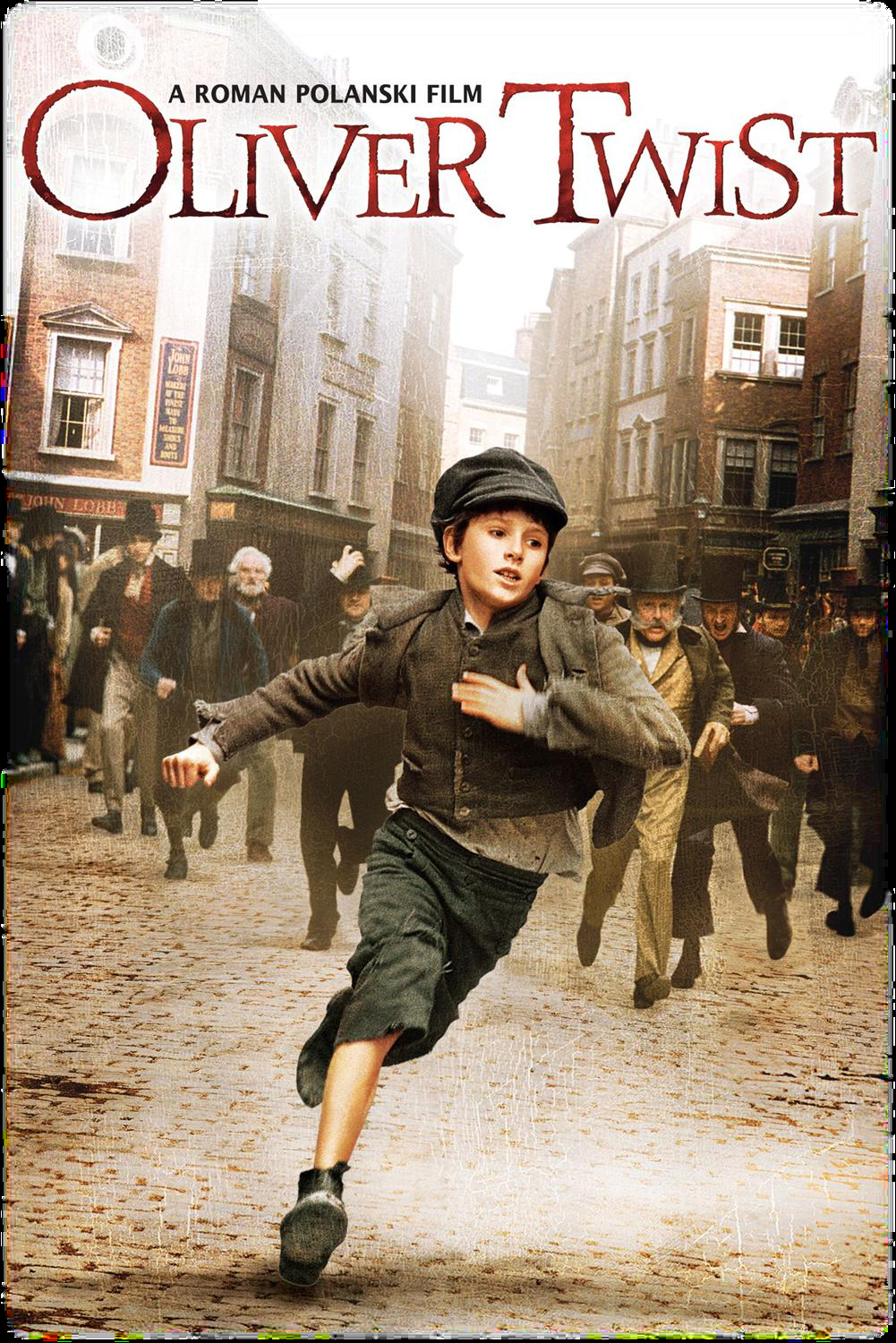
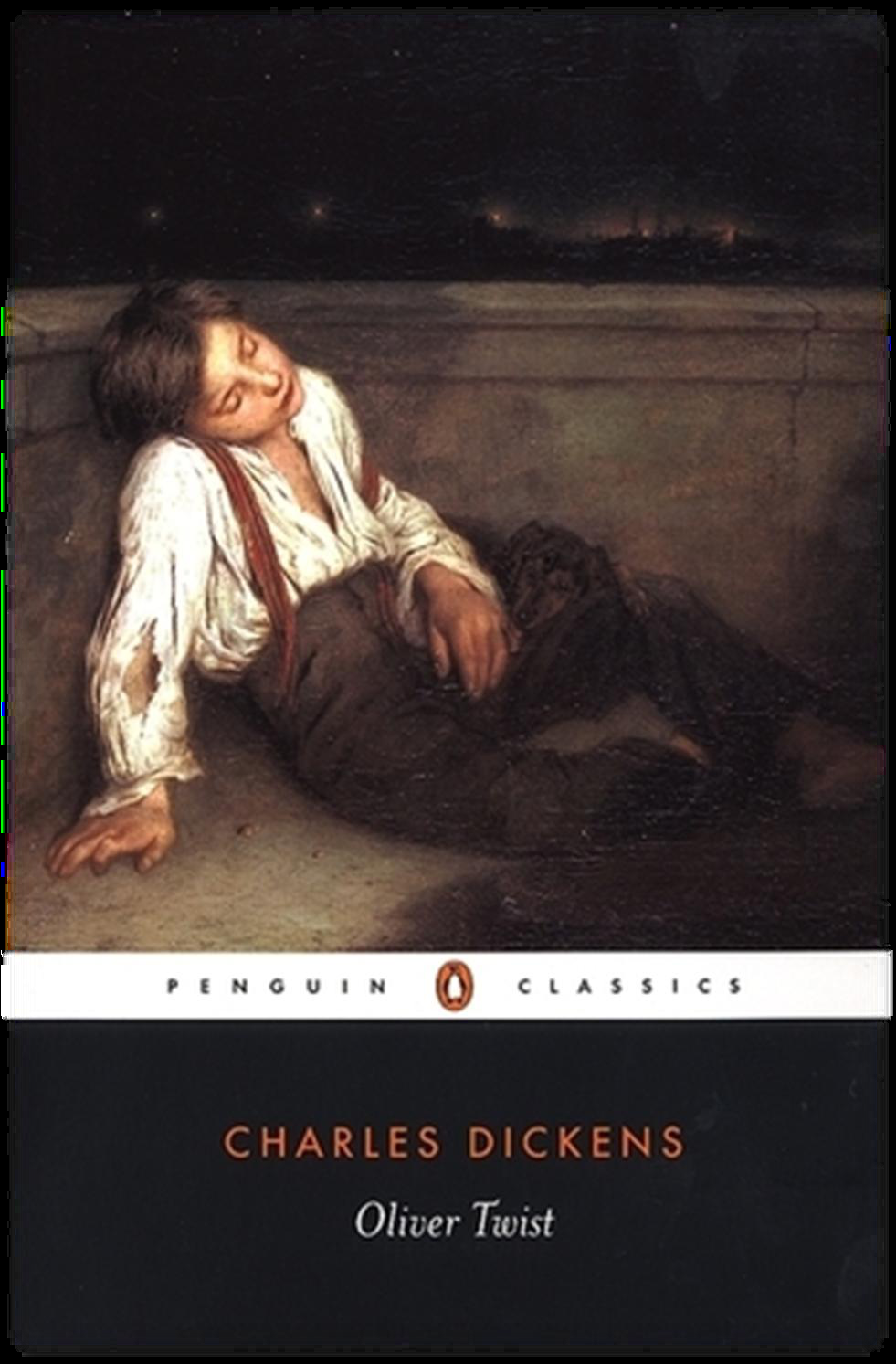
The Industrial Revolution was a period from the 18th to the 19th century where major changes in agriculture, manufacturing, mining, and transport had a profound effect on the socio-economic and cultural conditions starting in the United Kingdom, and then subsequently spreading throughout Europe, North America, and eventually the world.La Revolución Industrial fue un período del siglo XVIII al XIX en el que importantes cambios en la agricultura, la manufactura, la minería y el transporte tuvieron un profundo efecto en las condiciones socioeconómicas y culturales, comenzando en el Reino Unido y expandiéndose posteriormente por Europa, Norteamérica y finalmente el mundo entero.
The onset of the Industrial Revolution marked a major turning point in human history. Almost every aspect of daily life was eventually influenced in some way, from where people lived and worked to how people viewed the world and their life expectations.El inicio de la Revolución Industrial marcó un importante punto de inflexión en la historia de la humanidad. Prácticamente todos los aspectos de la vida cotidiana terminaron viéndose influidos de alguna manera, desde dónde vivían y trabajaban las personas hasta cómo veían el mundo y sus expectativas de vida.
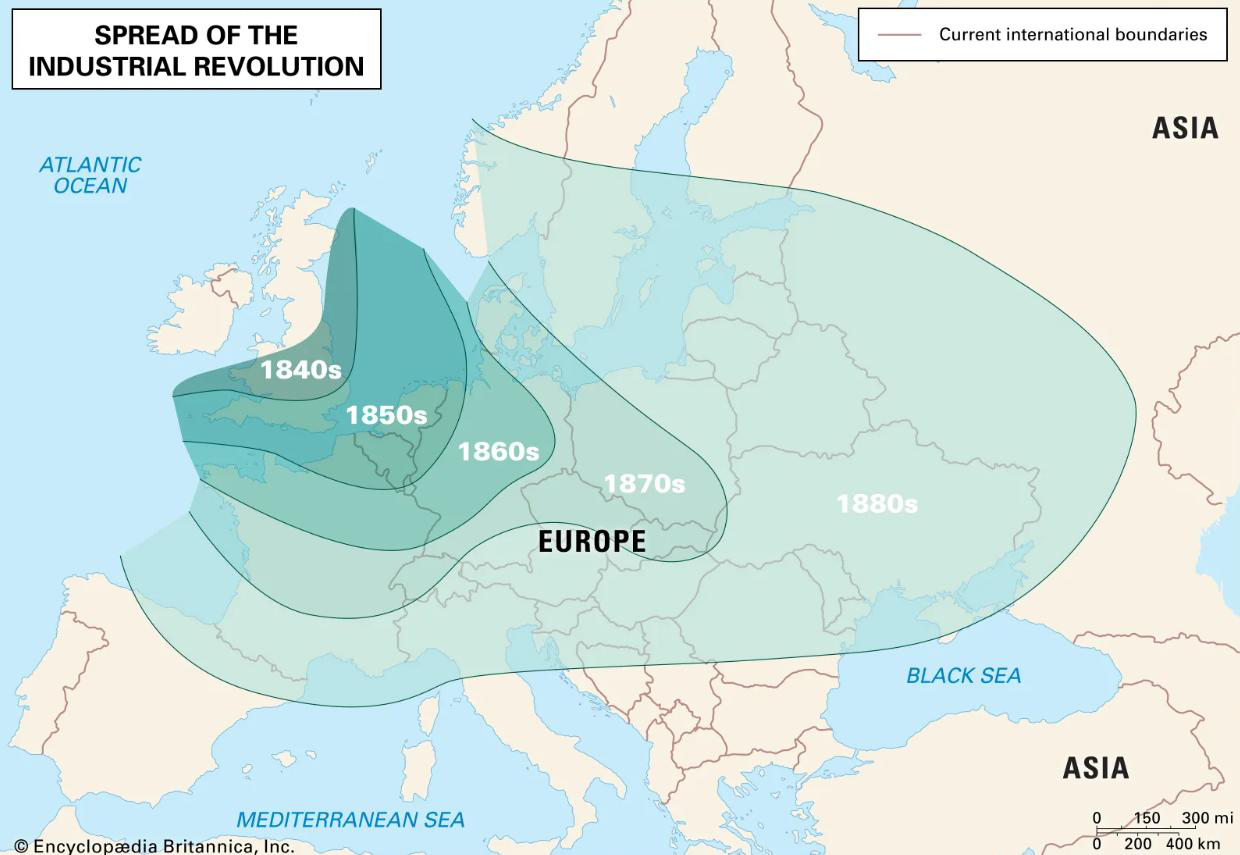
When did the Industrial Revolution begin?¿Cuándo comenzó la Revolución Industrial?
The date is still a subject of debate. Some support that it started in 1780 and it was fully felt in 1830 or 1840. Others say it occurred between 1760 and 1830. There are some who believe that the term “revolution” is not right, because the social and economic changes happened gradually.La fecha sigue siendo objeto de debate. Algunos defienden que comenzó en 1780 y se sintió plenamente en 1830 o 1840. Otros dicen que ocurrió entre 1760 y 1830. Hay quienes creen que el término «revolución» no es correcto, porque los cambios sociales y económicos fueron graduales.
2. The Domestic System2. El sistema doméstico
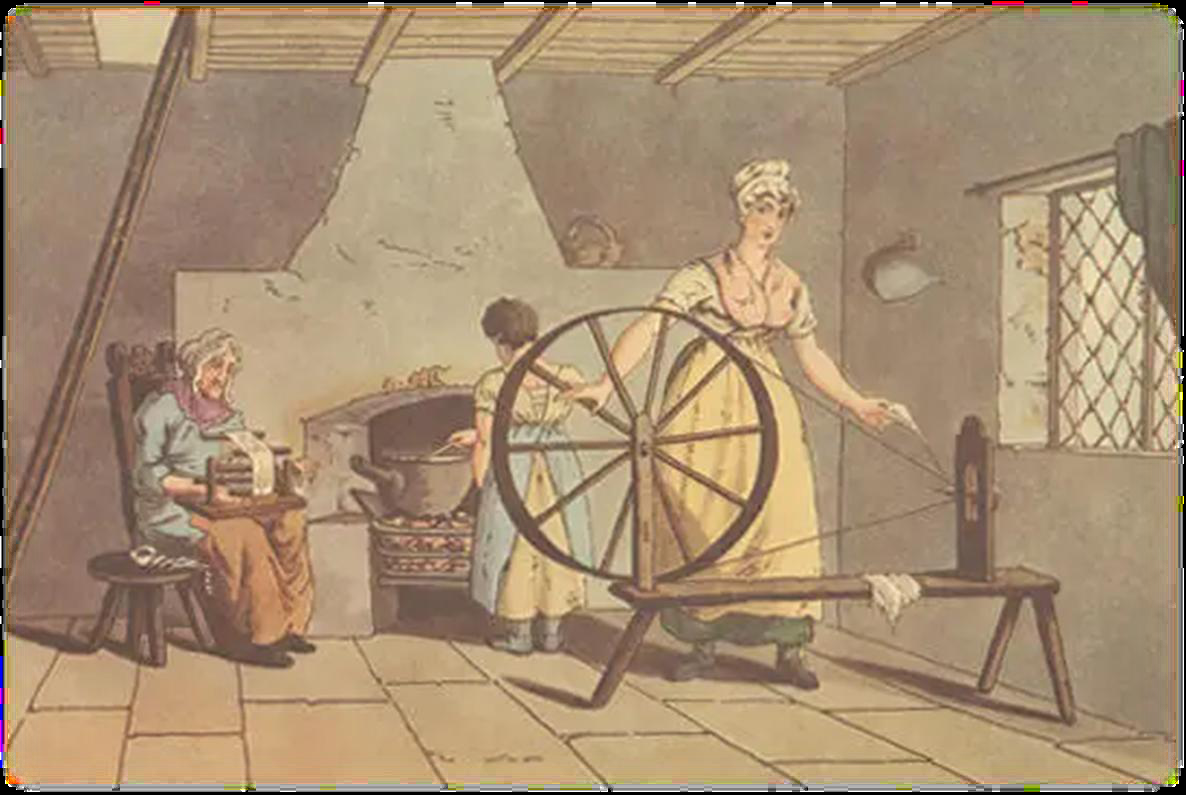
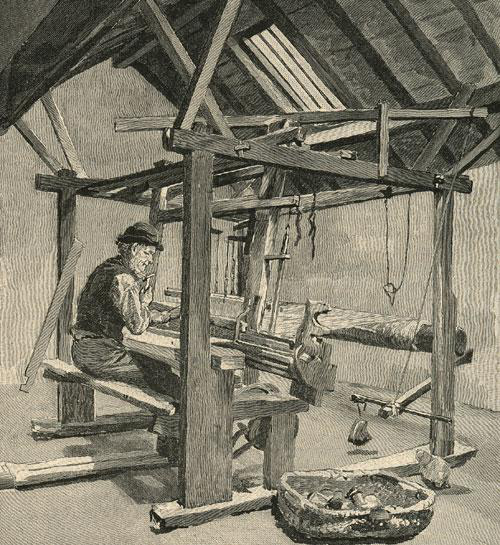
Domestic system was called the manufacturing system that existed before the industrial revolution.Sistema doméstico era como se llamaba al sistema de manufactura que existía antes de la revolución industrial.
- Before 1750 in Britain, goods were produced by very small industries (e.g. textile industry) in people’s homes or in small workshops.Antes de 1750 en Gran Bretaña, los bienes eran producidos por industrias muy pequeñas (p. ej. la industria textil) en los hogares de la gente o en pequeños talleres.
- The manufacturer delivered the raw materials and the whole family, including the children, made the goods in their cottage.El fabricante entregaba las materias primas y toda la familia, incluidos los niños, elaboraba los bienes en su casa.
- They used hand or water-powered spinning wheels or looms.Usaban ruecas o telares manuales o impulsados por agua.
- Then the manufacturer collected the products and paid the head of the family for the work.Luego el fabricante recogía los productos y pagaba al cabeza de familia por el trabajo.
- The domestic system had advantages for the workers, but many disadvantages for the manufacturers.El sistema doméstico tenía ventajas para los trabajadores, pero muchas desventajas para los fabricantes.
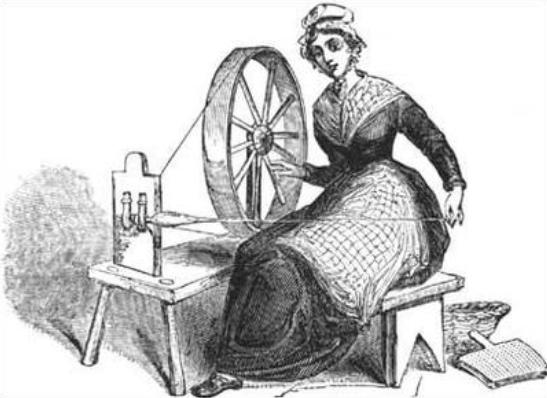
Advantages for the workers (Domestic System)Ventajas para los trabajadores (sistema doméstico)
- The workers were their own boss. This means that they had flexibility and could decide how much they would work and when.Los trabajadores eran sus propios jefes. Esto significa que tenían flexibilidad y podían decidir cuánto y cuándo trabajar.
- They did not have to move every day, and the profit was mainly for them.No tenían que desplazarse cada día, y el beneficio era principalmente para ellos.
Disadvantages for the manufacturers (Domestic System)Desventajas para los fabricantes (sistema doméstico)
- The manufacturer could not check the workers while they were working.El fabricante no podía supervisar a los trabajadores mientras trabajaban.
- Workers could not produce big amounts of products, so the profit was low.Los trabajadores no podían producir grandes cantidades de productos, por lo que el beneficio era bajo.
- Manufacturers had to move a lot. They had to bring the raw materials and then go to collect the products.Los fabricantes tenían que desplazarse mucho. Tenían que llevar las materias primas y luego ir a recoger los productos.
Why did the domestic system have to change?¿Por qué tuvo que cambiar el sistema doméstico?
The Domestic system had two main characteristics:El sistema doméstico tenía dos características principales:
- Everything was produced by hand, so the production was slow.Todo se producía a mano, por lo que la producción era lenta.
- It also produced goods in small quantities.También producía bienes en pequeñas cantidades.
However, the population was growing fast in the 18th century, so this system could not produce the number of goods people needed.Sin embargo, la población crecía rápidamente en el siglo XVIII, por lo que este sistema no podía producir la cantidad de bienes que la gente necesitaba.
The Industrial revolution started when some manufacturers recognized the disadvantages of the Domestic system and invented machines that could do the work of several people. This was a long process before 1750. It did not happen suddenly.La Revolución Industrial comenzó cuando algunos fabricantes reconocieron las desventajas del sistema doméstico e inventaron máquinas que podían hacer el trabajo de varias personas. Fue un largo proceso anterior a 1750. No ocurrió de repente.
3. The Factory System3. El sistema de fábricas
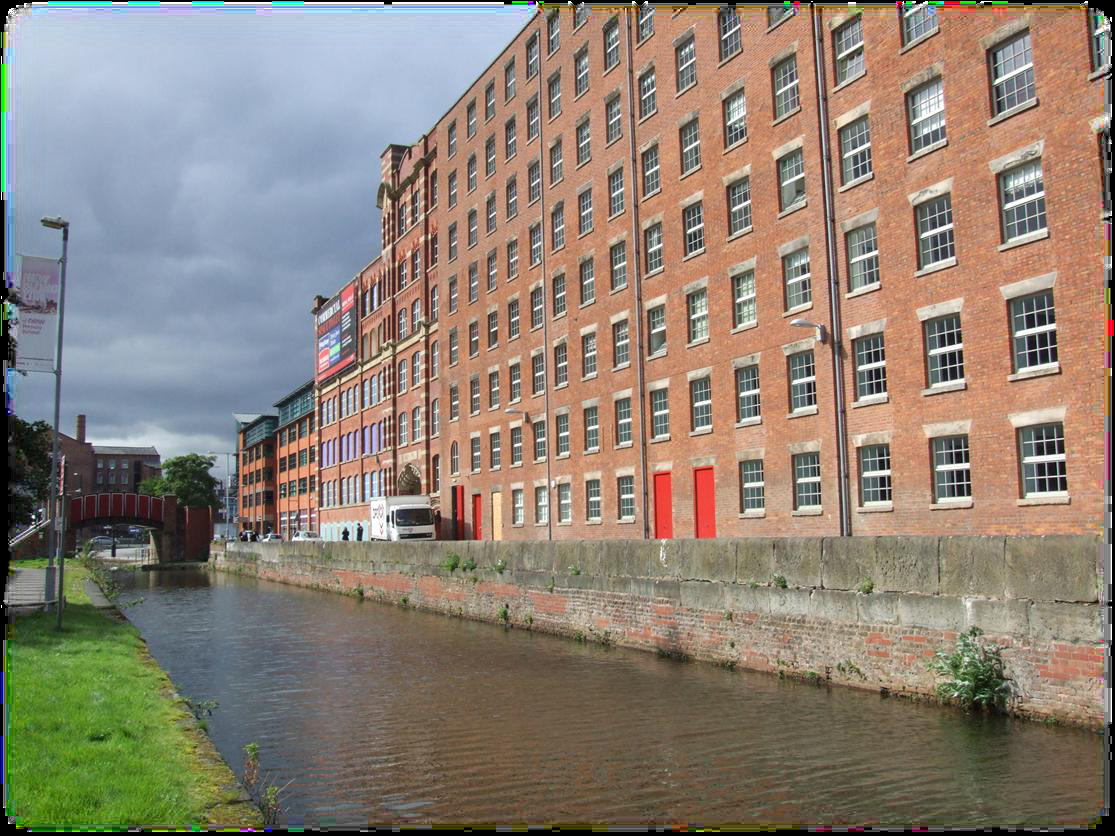
The factory system was called the manufacturing system that appeared in 1750 in Britain and was based on machines.Sistema de fábricas era como se llamaba al sistema de manufactura que apareció en 1750 en Gran Bretaña y estaba basado en máquinas.
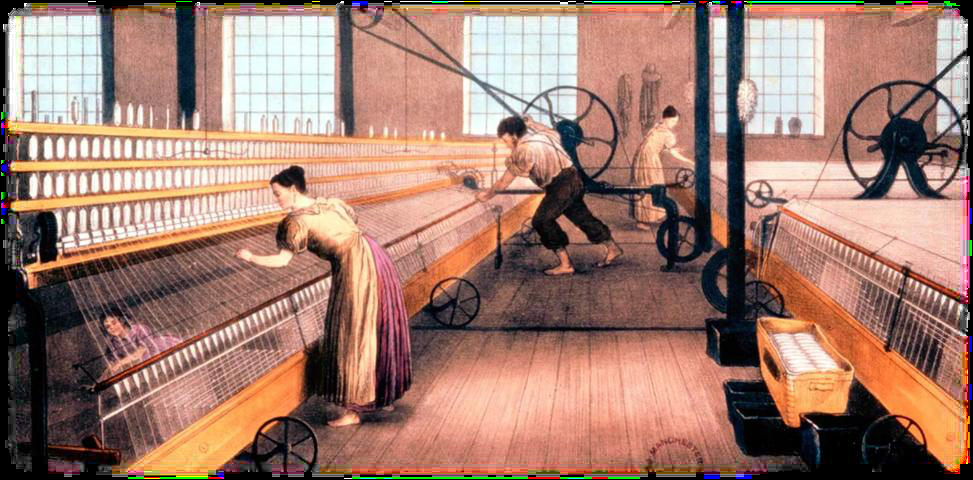
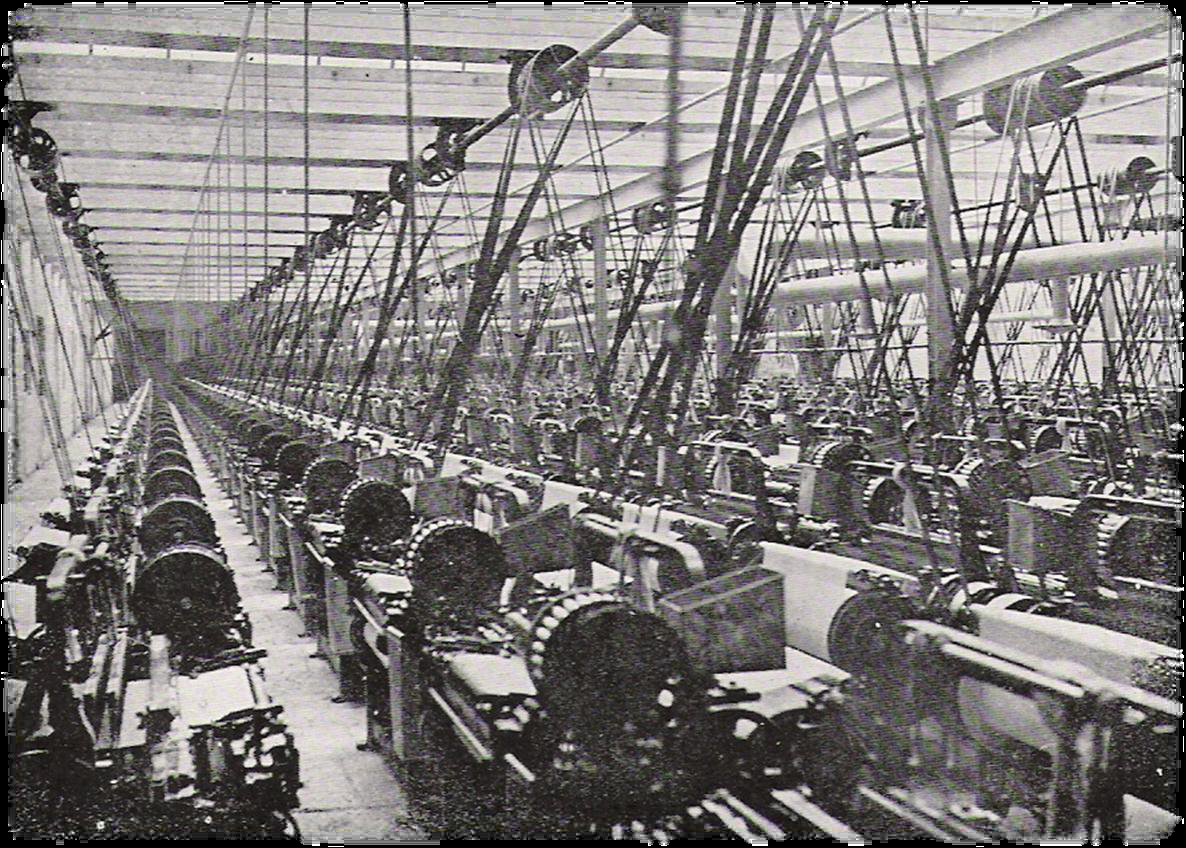
Instead of people working hand-powered machines in their homes, big factories were established with rows of large machines. Workers left their homes to go and work in the factory, in return for a weekly wage.En lugar de trabajar con máquinas manuales en sus hogares, se establecieron grandes fábricas con hileras de máquinas. Los trabajadores dejaban sus casas para ir a trabajar en la fábrica, a cambio de un salario semanal.
As the machines could do the work of families, production increased, and goods were produced at affordable prices. In the beginning, machines were powered by water mills, but later on many used steam power.Como las máquinas podían hacer el trabajo de familias enteras, la producción aumentó y los bienes se produjeron a precios asequibles. Al principio las máquinas funcionaban con molinos de agua, pero más tarde muchas usaron energía de vapor.
The Domestic system still continued alongside the Factory System for a time but then disappeared as it became very difficult to compete against mass production.El sistema doméstico continuó coexistiendo con el sistema de fábricas durante un tiempo, pero luego desapareció al resultar muy difícil competir contra la producción en masa.
Advantages for the workers (Factory System)Ventajas para los trabajadores (sistema de fábricas)
- The workers were not responsible for the production anymore.Los trabajadores ya no eran responsables de la producción.
- Even if the production was ruined, they got their wages.Aunque la producción se arruinara, recibían su salario.
Disadvantages for the workers (Factory System)Desventajas para los trabajadores (sistema de fábricas)
- They lost their flexibility in work. They could not decide when and how to work.Perdieron su flexibilidad laboral. No podían decidir cuándo ni cómo trabajar.
- They were obliged to work long hours under supervision.Estaban obligados a trabajar largas jornadas bajo supervisión.
- They had to move every day to go to work.Tenían que desplazarse cada día para ir a trabajar.
- They gained less money, as the profit was not all theirs.Ganaban menos dinero, ya que el beneficio no era todo suyo.
- The wages were usually low.Los salarios eran generalmente bajos.
Improvements for manufacturers (Factory System)Mejoras para los fabricantes (sistema de fábricas)
- The machines could do the work of many families, so the production increased a lot. They made a lot of profit.Las máquinas podían hacer el trabajo de muchas familias, así que la producción aumentó enormemente. Obtenían grandes beneficios.
- The manufacturers could now check the workers and push them to work more.Los fabricantes ahora podían supervisar a los trabajadores y presionarlos para que trabajaran más.
- They did not have to move anymore.Ya no tenían que desplazarse.
What happened to cottage industry?¿Qué pasó con la industria artesanal?
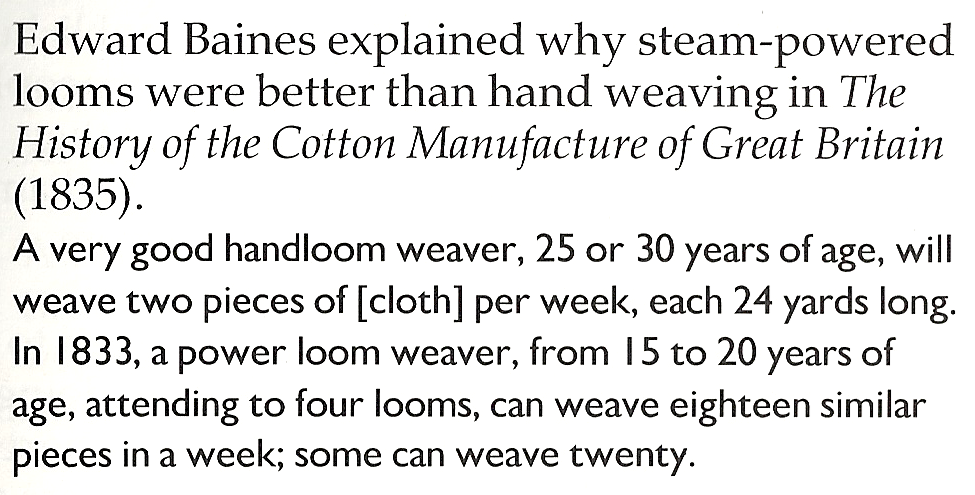
Edward Baines explained why steam-powered looms were better than hand weaving in The History of the Cotton Manufacture of Great Britain (1835):Edward Baines explicó por qué los telares de vapor eran mejores que el tejido manual en The History of the Cotton Manufacture of Great Britain (1835):
A very good handloom weaver, 25 or 30 years of age, will weave two pieces of [cloth] per week, each 24 yards long. In 1833, a power loom weaver, from 15 to 20 years of age, attending to four looms, can weave eighteen similar pieces in a week; some can weave twenty.Un muy buen tejedor manual, de 25 o 30 años de edad, tejerá dos piezas de [tela] por semana, cada una de 24 yardas de largo. En 1833, un tejedor con telar mecánico, de 15 a 20 años de edad, atendiendo cuatro telares, puede tejer dieciocho piezas similares en una semana; algunos pueden tejer veinte. Edward Baines, The History of the Cotton Manufacture of Great Britain, 1835
4. Causes of the Industrial Revolution4. Causas de la Revolución Industrial
There were many reasons why industry changed:Hubo muchas razones por las que la industria cambió:
- Invention of steam powerInvención de la energía de vapor
- Invention of new machinesInvención de nuevas máquinas
- Increased populationAumento de la población
- Development of transport systemsDesarrollo de sistemas de transporte
- Development of the British EmpireDesarrollo del Imperio Británico
4.1 The Steam Engine4.1 La máquina de vapor
Steam-powered machines in the iron industry, such as the steam hammer, could shape huge pieces of iron for making machines, girders, ships or railway tracks.Las máquinas de vapor en la industria del hierro, como el martillo de vapor, podían dar forma a enormes piezas de hierro para fabricar máquinas, vigas, barcos o vías de tren.
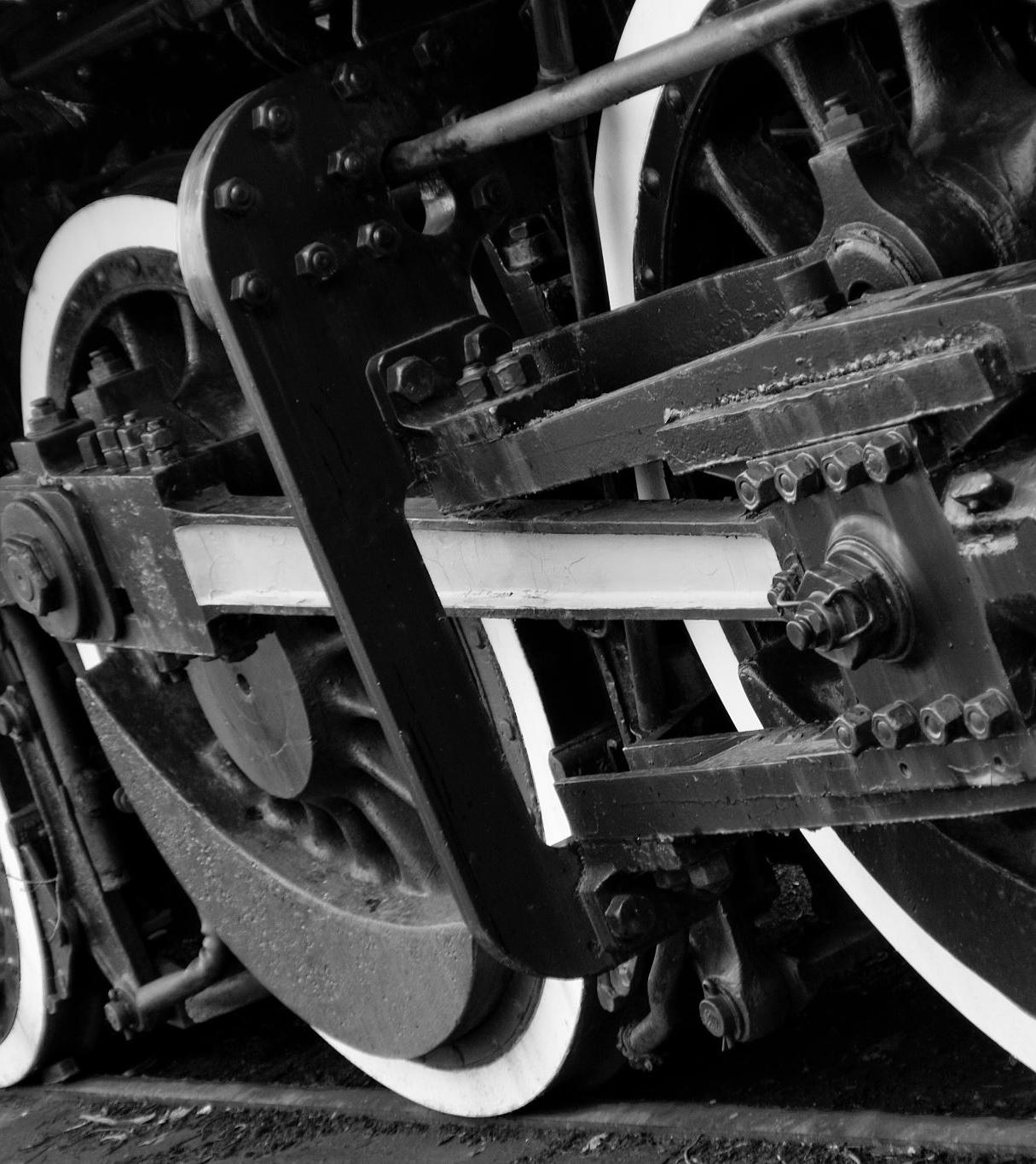
Steam pumps could now pump water out of mines, allowing deeper mines to be dug. More coal was produced which was needed, in turn, to fuel the steam engines. Many factory machines were steam-powered. Steam engines powered trains and ships. These could carry much larger quantities of raw materials and finished goods across Britain and the world in a faster time.Las bombas de vapor ahora podían extraer agua de las minas, permitiendo excavar minas más profundas. Se producía más carbón, que a su vez era necesario para alimentar las máquinas de vapor. Muchas máquinas de fábrica funcionaban con vapor. Los motores de vapor impulsaban trenes y barcos. Estos podían transportar cantidades mucho mayores de materias primas y productos acabados por Gran Bretaña y el mundo en menos tiempo.
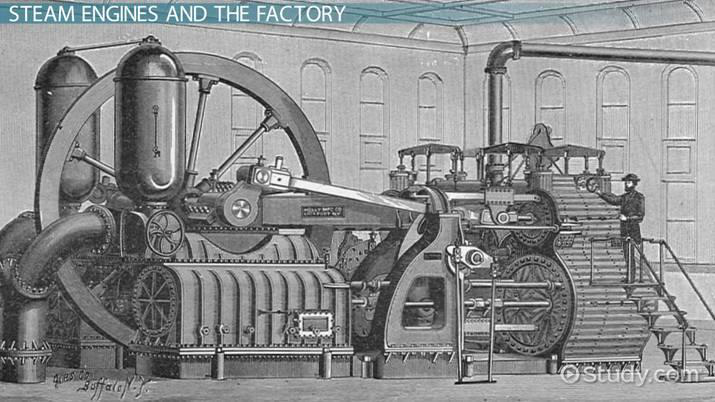
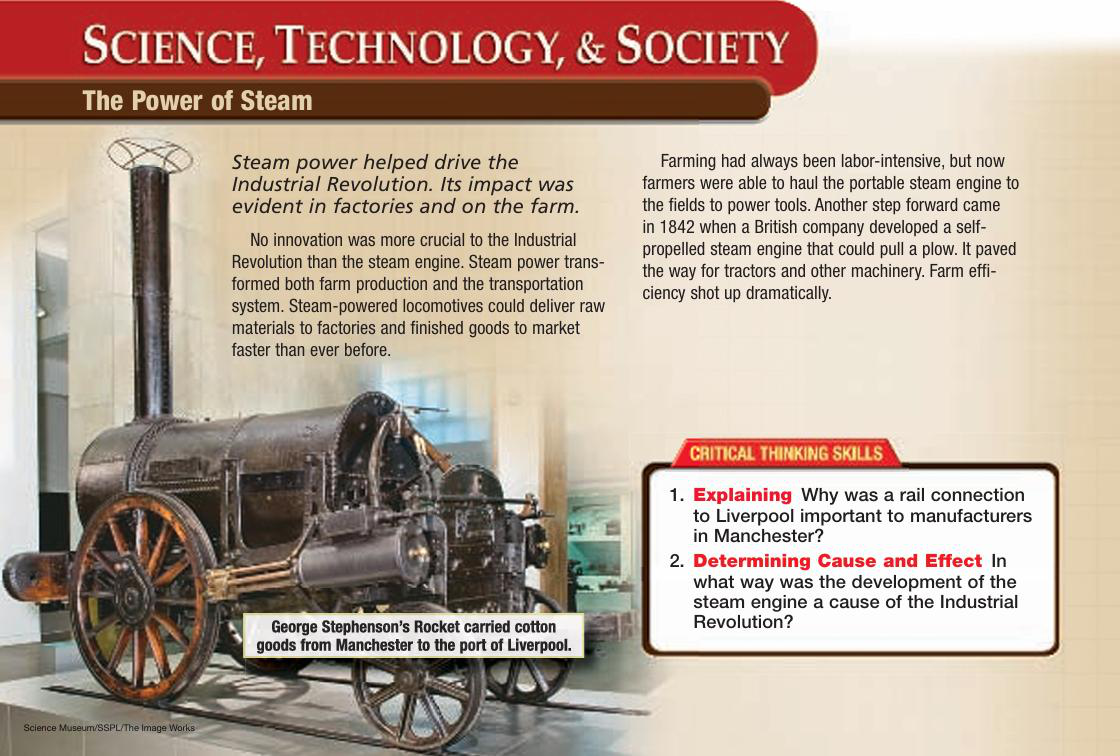
Steam power helped drive the Industrial Revolution. Its impact was evident in factories and on the farm. No innovation was more crucial to the Industrial Revolution than the steam engine. Steam power transformed both farm production and the transportation system. Steam-powered locomotives could deliver raw materials to factories and finished goods to market faster than ever before.La energía de vapor ayudó a impulsar la Revolución Industrial. Su impacto fue evidente en las fábricas y en el campo. Ninguna innovación fue más crucial para la Revolución Industrial que la máquina de vapor. La energía de vapor transformó tanto la producción agrícola como el sistema de transporte. Las locomotoras de vapor podían entregar materias primas a las fábricas y productos acabados al mercado más rápido que nunca.
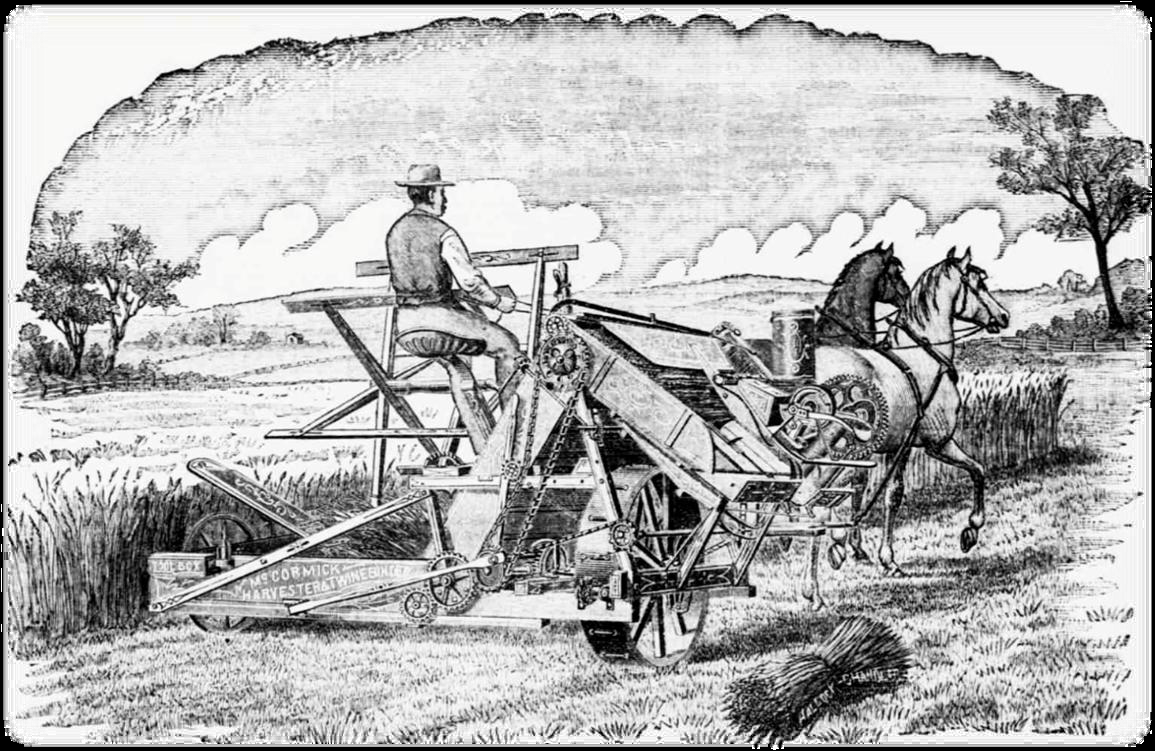
Farming had always been labor-intensive, but now farmers were able to haul the portable steam engine to the fields to power tools. Another step forward came in 1842 when a British company developed a self-propelled steam engine that could pull a plow. It paved the way for tractors and other machinery. Farm efficiency shot up dramatically.La agricultura siempre había requerido mucha mano de obra, pero ahora los granjeros podían llevar la máquina de vapor portátil a los campos para accionar herramientas. Otro avance llegó en 1842, cuando una empresa británica desarrolló un motor de vapor autopropulsado que podía tirar de un arado. Abrió el camino a los tractores y otra maquinaria. La eficiencia agrícola aumentó drásticamente.
4.2 New Machines4.2 Nuevas máquinas
This was a period of invention. Many new machines were designed to speed up production.Este fue un período de inventos. Se diseñaron muchas máquinas nuevas para acelerar la producción.
- In the 18th century, these were powered by hand or water, but the steam-powered machines of the next century were altogether more powerful, faster, and more precise. Now mass production was possible.En el siglo XVIII funcionaban a mano o con agua, pero las máquinas de vapor del siglo siguiente eran mucho más potentes, rápidas y precisas. Ahora la producción en masa era posible.

4.3 Population Growth4.3 Crecimiento de la población
- The growing population and the migration of people from the countryside to the industrial towns provided a huge workforce for new industries. Without this the factories could not have succeeded.La creciente población y la migración de personas del campo a las ciudades industriales proporcionaron una enorme fuerza laboral para las nuevas industrias. Sin esto, las fábricas no habrían podido triunfar.
- The increased population also resulted in many more people needing and buying goods. There was, therefore, a huge demand for these new mass-produced goods.El aumento de la población también supuso que muchas más personas necesitaran y compraran bienes. Hubo, por tanto, una enorme demanda de estos nuevos bienes producidos en masa.
4.4 New Transport Systems4.4 Nuevos sistemas de transporte
- As industry started changing, so new transport systems developed alongside.A medida que la industria empezaba a cambiar, se desarrollaron nuevos sistemas de transporte paralelamente.
- In the mid-18th century, the first canals were built to transport raw materials to the factories and to take finished goods to markets.A mediados del siglo XVIII se construyeron los primeros canales para transportar materias primas a las fábricas y llevar productos acabados a los mercados.
- Following the invention of the steam engine, Railways and steamships transformed the transportation of both raw materials and mass-produced goods. Costs were reduced and time was saved.Tras la invención de la máquina de vapor, los ferrocarriles y los barcos de vapor transformaron el transporte tanto de materias primas como de bienes producidos en masa. Se redujeron costes y se ahorró tiempo.
4.5 The British Empire4.5 El Imperio Británico
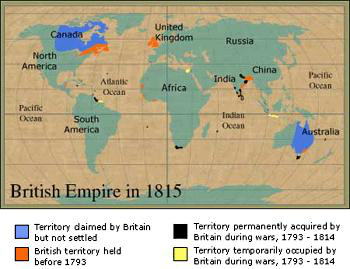
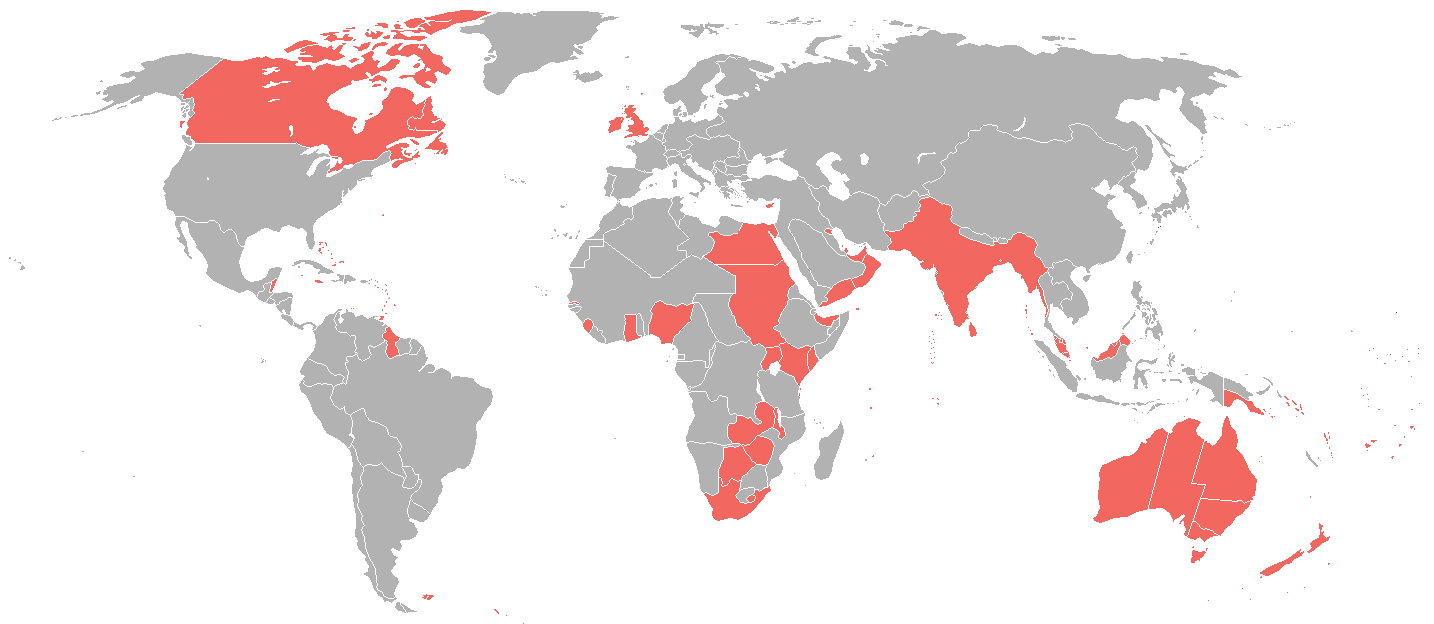
During the 18th and 19th centuries, Britain gained control of more and more territories or colonies. This empire helped the revolution of industry by providing the necessary raw materials. It also provided new markets in which to sell Britain’s manufactured goods.Durante los siglos XVIII y XIX, Gran Bretaña fue ganando el control de cada vez más territorios o colonias. Este imperio ayudó a la revolución de la industria proporcionando las materias primas necesarias. También proporcionó nuevos mercados en los que vender los bienes manufacturados británicos.
Queen Victoria is associated with Britain’s great age of industrial expansion, economic progress and, especially, empire. Britain had a worldwide empire on which the sun never set.La Reina Victoria está asociada con la gran era británica de expansión industrial, progreso económico y, especialmente, imperio. Gran Bretaña tenía un imperio mundial en el que nunca se ponía el sol.
5. Key Inventions and Innovations5. Inventos e innovaciones clave
The Industrial Revolution involved innovation, capital investment and increased output:La Revolución Industrial implicó innovación, inversión de capital y aumento de la producción:
- Textiles: John Kay’s Flying Shuttle was a very successful innovation in weaving. James Hargreaves’ Spinning Jenny (1764).Textiles: La lanzadera volante de John Kay fue una innovación muy exitosa en el tejido. La Spinning Jenny de James Hargreaves (1764).
- Iron and steel: Huge ironworks, eg Richard Crawshay’s Cyfartha works in South Wales and John Roebuck’s Carron Works in Scotland.Hierro y acero: Enormes fundiciones, p. ej. las obras Cyfartha de Richard Crawshay en el sur de Gales y las Carron Works de John Roebuck en Escocia.
- Coal: Better coal mining techniques allowed deeper mines.Carbón: Mejores técnicas de minería de carbón permitieron minas más profundas.
- Steam power: James Watt made steam engines much more efficient in the 1760s and 1770s giving huge savings on fuel.Energía de vapor: James Watt hizo que las máquinas de vapor fueran mucho más eficientes en las décadas de 1760 y 1770, logrando enormes ahorros de combustible.
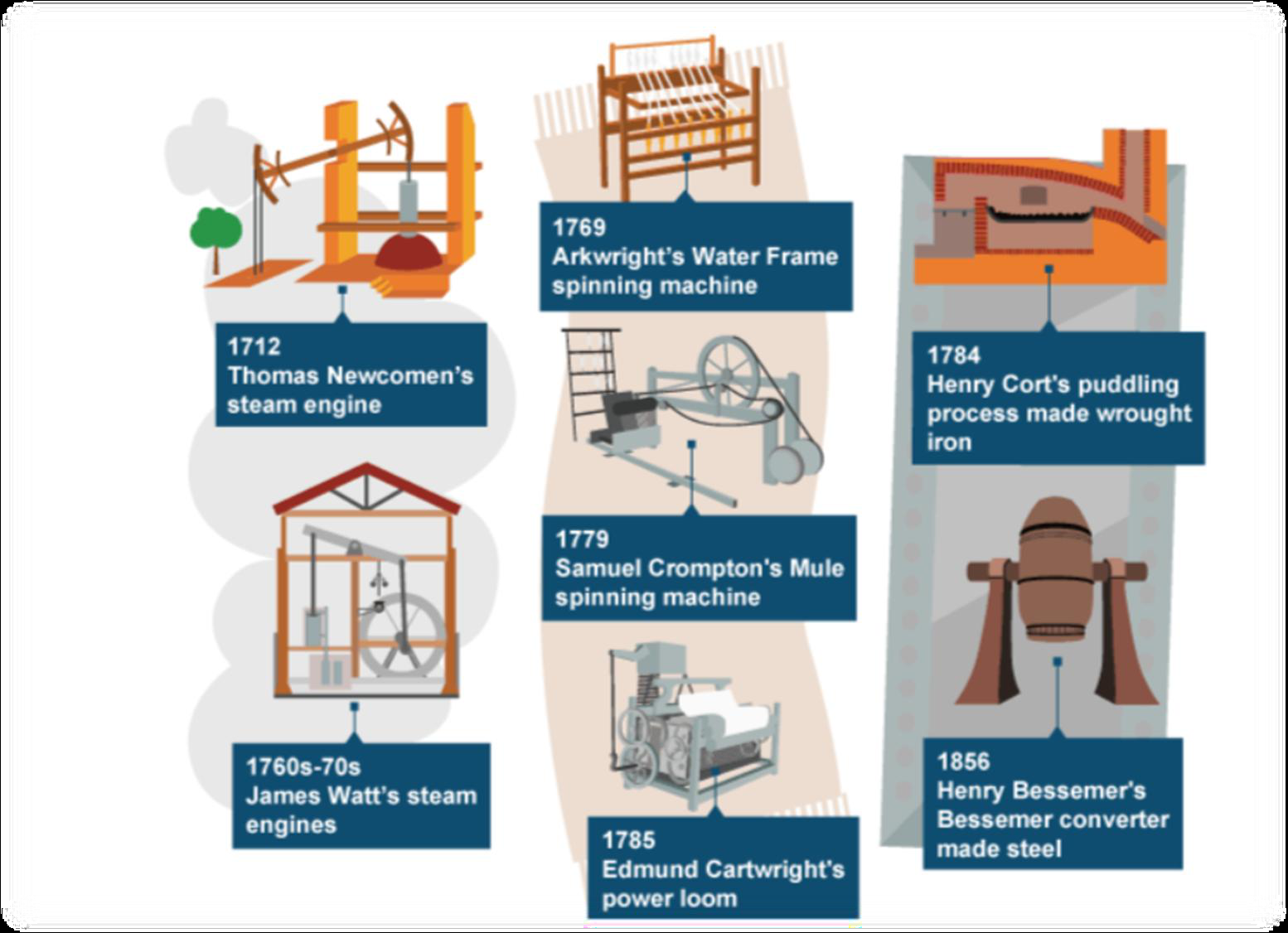
Timeline of key inventionsCronología de inventos clave

| YearAño | InventionInvento |
|---|---|
| 1712 | Thomas Newcomen’s steam engineMáquina de vapor de Thomas Newcomen |
| 1760s–70s | James Watt’s steam enginesMáquinas de vapor de James Watt |
| 1769 | Arkwright’s Water Frame spinning machineMáquina de hilar Water Frame de Arkwright |
| 1779 | Samuel Crompton’s Mule spinning machineMáquina de hilar Mule de Samuel Crompton |
| 1784 | Henry Cort’s puddling process made wrought ironEl proceso de pudelado de Henry Cort producía hierro forjado |
| 1785 | Edmund Cartwright’s power loomTelar mecánico de Edmund Cartwright |
| 1856 | Henry Bessemer’s Bessemer converter made steelEl convertidor Bessemer de Henry Bessemer producía acero |
6. The Agricultural Revolution6. La Revolución Agrícola
The Agricultural Revolution was the unprecedented increase in agricultural production in Britain due to increases in labor and land productivity between the mid-17th and late 19th centuries.La Revolución Agrícola fue el aumento sin precedentes de la producción agrícola en Gran Bretaña debido a incrementos en la productividad del trabajo y la tierra entre mediados del siglo XVII y finales del XIX.
- Agricultural output grew faster than the population over the century to 1770 and thereafter productivity remained among the highest in the world.La producción agrícola creció más rápido que la población durante el siglo hasta 1770 y, a partir de entonces, la productividad se mantuvo entre las más altas del mundo.
- The rise in productivity accelerated the decline of the agricultural share of the labor force, adding to the urban workforce on which industrialization depended. The Agricultural Revolution has therefore been cited as a cause of the Industrial Revolution.El aumento de la productividad aceleró el declive de la proporción agrícola de la fuerza laboral, ampliando la mano de obra urbana de la que dependía la industrialización. La Revolución Agrícola ha sido por tanto citada como una causa de la Revolución Industrial.
- However, historians also continue to dispute whether the developments leading to the unprecedented agricultural growth can be seen as “a revolution,” since the growth was, in fact, a result of a series of significant changes over a long period of time.Sin embargo, los historiadores también siguen debatiendo si los desarrollos que condujeron al crecimiento agrícola sin precedentes pueden considerarse «una revolución», ya que el crecimiento fue, de hecho, el resultado de una serie de cambios significativos a lo largo de un período prolongado.
The Agricultural Revolution paved the way: after buying up the land of village farmers, wealthy landowners enclosed their land with fences or hedges. The increase in their landholdings enabled them to cultivate larger fields. Within these larger fields, called enclosures, landowners experimented with more productive seeding and harvesting methods to boost crop yields.La Revolución Agrícola preparó el camino: tras comprar las tierras de los agricultores de aldea, los terratenientes adinerados cercaron sus tierras con vallas o setos. El aumento de sus propiedades les permitió cultivar campos más grandes. Dentro de estos campos más grandes, llamados cercamientos, los terratenientes experimentaron con métodos de siembra y cosecha más productivos para aumentar el rendimiento de los cultivos.
6.1 The Enclosure Movement6.1 El movimiento de cercamiento
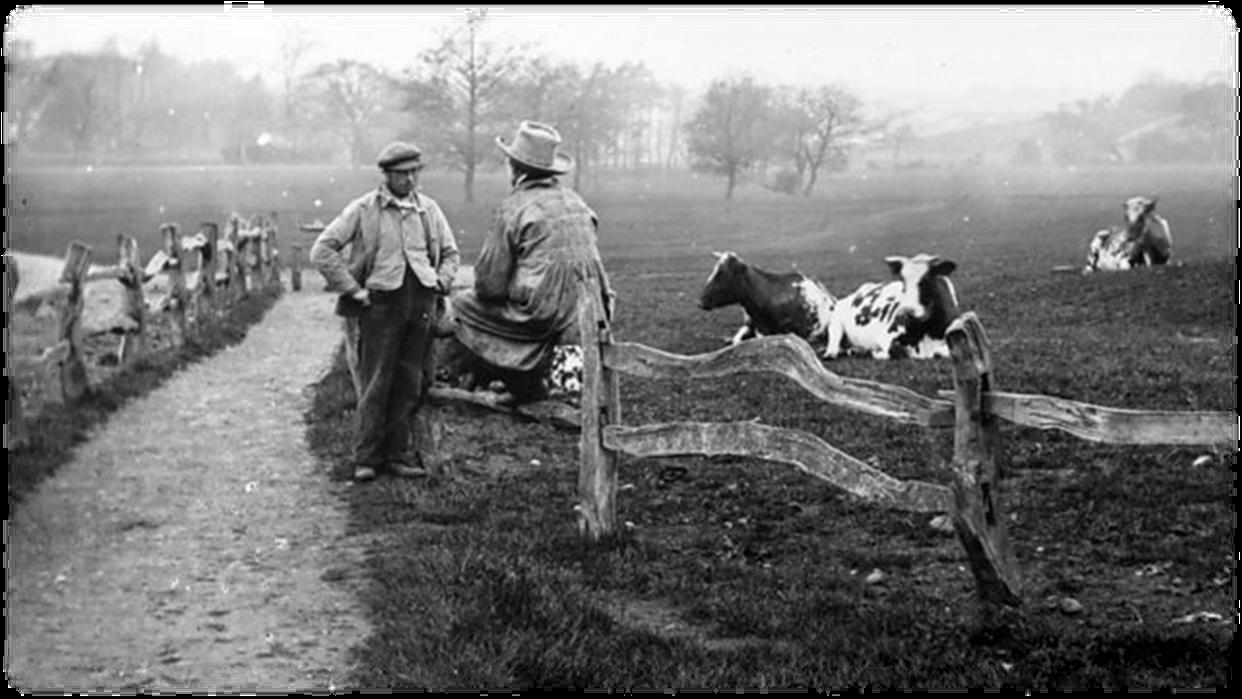
Enclosure movement: The legal process in England during the 18th century of enclosing a number of small landholdings to create one larger farm. Once enclosed, the use of the land became restricted to the owner and it ceased to be common land for communal use. In England and Wales, the term is also used for the process that ended the ancient system of arable farming in open fields.Movimiento de cercamiento: El proceso legal en Inglaterra durante el siglo XVIII de cercar varias pequeñas parcelas para crear una granja más grande. Una vez cercada, el uso de la tierra quedaba restringido al propietario y dejaba de ser tierra común para uso comunal. En Inglaterra y Gales, el término también se usa para el proceso que puso fin al antiguo sistema de agricultura de campo abierto.
The enclosure movement had two important resultsEl movimiento de cercamiento tuvo dos resultados importantes
First, landowners tried new agricultural methods.Primero, los terratenientes probaron nuevos métodos agrícolas.
Second, large landowners forced small farmers to become tenant farmers or to give up farming and move to the cities.Segundo, los grandes terratenientes obligaron a los pequeños agricultores a convertirse en arrendatarios o a abandonar la agricultura y mudarse a las ciudades.
- Enclosure is the process that ended traditional rights on common land formerly held in the open field system and restricted the use of land to the owner.Cercamiento es el proceso que puso fin a los derechos tradicionales sobre las tierras comunales que antes se mantenían en el sistema de campo abierto y restringió el uso de la tierra al propietario.
- Enclosure is one of the causes of the Agricultural Revolution and a key factor behind the labor migration from rural areas to gradually industrializing cities.El cercamiento es una de las causas de la Revolución Agrícola y un factor clave detrás de la migración laboral de las zonas rurales a las ciudades en proceso de industrialización.
7. Social Consequences7. Consecuencias sociales
What were the social consequences of the Industrial Revolution?¿Cuáles fueron las consecuencias sociales de la Revolución Industrial?
So far, we have largely focused on the economic character of the Industrial Revolution. We have examined how technological innovation and economic reorganization transformed Britain into an industrial capitalist economy. Next, we are going to consider the social, cultural and political consequences of this economic transformation.Hasta ahora, nos hemos centrado en gran medida en el carácter económico de la Revolución Industrial. Hemos examinado cómo la innovación tecnológica y la reorganización económica transformaron Gran Bretaña en una economía capitalista industrial. A continuación, vamos a considerar las consecuencias sociales, culturales y políticas de esta transformación económica.
‘Social relations are closely bound up with productive forces. In acquiring new productive forces men change their mode of production; and in changing their mode of production, in changing the way of earning their living, they change all their social relations. The hand-mill gives you society with the feudal lord; the steam-mill, society with the industrial capitalist.’«Las relaciones sociales están estrechamente vinculadas a las fuerzas productivas. Al adquirir nuevas fuerzas productivas, los hombres cambian su modo de producción; y al cambiar su modo de producción, al cambiar la forma de ganarse la vida, cambian todas sus relaciones sociales. El molino de mano da la sociedad con el señor feudal; el molino de vapor, la sociedad con el capitalista industrial.» Karl Marx, The Poverty of Philosophy, 1847
- By ‘social’ consequences we mean the way in which peoples’ lives were changed in a material, externally observable way — e.g. the rise of social classes or living and working conditions.Por consecuencias «sociales» nos referimos a la manera en que las vidas de las personas cambiaron de forma material y externamente observable — p. ej. el surgimiento de clases sociales o las condiciones de vida y trabajo.
- ‘Cultural’ consequences refer to the intellectual and spiritual way in which peoples’ internal lives were transformed — e.g. how people viewed the world and what they expected from it.Las consecuencias «culturales» se refieren a la forma intelectual y espiritual en que las vidas internas de las personas se transformaron — p. ej. cómo veían el mundo y qué esperaban de él.
- ‘Political’ consequences are concerned with how traditional pre-industrial systems of power and governance were challenged by new types of people with new ways of thinking about how the country should be run — e.g. why should aristocrats decide everything just because they own lots of land?Las consecuencias «políticas» se refieren a cómo los sistemas tradicionales preindustriales de poder y gobierno fueron desafiados por nuevos tipos de personas con nuevas formas de pensar sobre cómo debería gobernarse el país — p. ej. ¿por qué deberían los aristócratas decidir todo solo porque poseen mucha tierra?

We can identify three interrelated social transformations brought about by the Industrial Revolution:Podemos identificar tres transformaciones sociales interrelacionadas provocadas por la Revolución Industrial:
- Urbanization: The change in where people lived. People went from being village dwellers to being town dwellers. Towns grew rapidly with significant social consequences.Urbanización: El cambio en dónde vivía la gente. Las personas pasaron de ser habitantes de aldeas a habitantes de ciudades. Las ciudades crecieron rápidamente con importantes consecuencias sociales.
- New social classes: The change in who people were. The rise in the new entrepreneurial middle class and urban working class.Nuevas clases sociales: El cambio en quiénes eran las personas. El surgimiento de la nueva clase media emprendedora y la clase obrera urbana.
- New ways of working: The change in the mode and method of production resulted in new ways of earning a living.Nuevas formas de trabajo: El cambio en el modo y método de producción resultó en nuevas formas de ganarse la vida.
7.1 Urbanization7.1 Urbanización
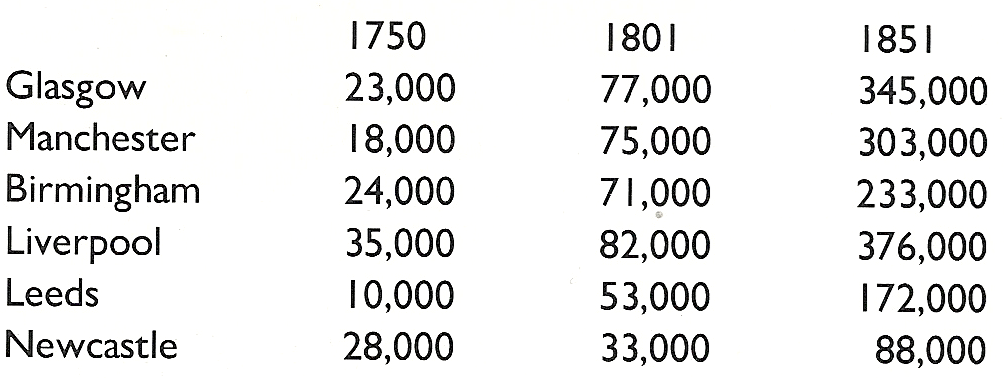
People went from being village dwellers to being town dwellers. Towns grew rapidly with significant social consequences.Las personas pasaron de ser habitantes de aldeas a habitantes de ciudades. Las ciudades crecieron rápidamente con importantes consecuencias sociales.
| CityCiudad | 1750 | 1801 | 1851 |
|---|---|---|---|
| Glasgow | 23,000 | 77,000 | 345,000 |
| Manchester | 18,000 | 75,000 | 303,000 |
| Birmingham | 24,000 | 71,000 | 233,000 |
| Liverpool | 35,000 | 82,000 | 376,000 |
| Leeds | 10,000 | 53,000 | 172,000 |
| Newcastle | 28,000 | 33,000 | 88,000 |
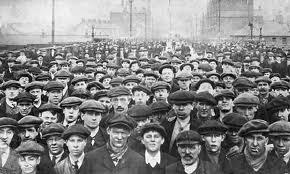

During this time the population of London went up from just over 1 million in 1801, to 6.5 million in 1901.Durante este período, la población de Londres pasó de poco más de 1 millón en 1801 a 6,5 millones en 1901.
A bigger population provided the larger labor force that the Factory System needed. It can also be argued, however, that more jobs enabled families to expand more quickly. The increased numbers meant that more food was needed, and this caused the existing farming improvements to accelerate. Many more houses were needed, and most people living in towns had to suffer overcrowding in quickly, poorly-built houses.Una población mayor proporcionaba la fuerza laboral más amplia que necesitaba el sistema de fábricas. Sin embargo, también puede argumentarse que más empleos permitieron a las familias crecer más rápidamente. El aumento del número de personas significó que se necesitaba más comida, lo que aceleró las mejoras agrícolas existentes. Se necesitaron muchas más viviendas, y la mayoría de la gente que vivía en las ciudades tuvo que sufrir el hacinamiento en casas construidas rápida y deficientemente.
Why did the population grow so quickly?¿Por qué creció la población tan rápidamente?
1) The birth rate rose, and the death rate fell. In other words, more babies were being born and fewer people died so early.1) La tasa de natalidad subió y la tasa de mortalidad bajó. En otras palabras, nacían más bebés y menos personas morían tan pronto.
2) Improved, more efficient farming methods resulted in better quality food being produced, and more of it. Nutrition therefore improved for most people from the unborn child upwards. This helped reduce slightly the infant death rate and also improved the fertility of couples.2) Los métodos agrícolas mejorados y más eficientes dieron como resultado alimentos de mejor calidad y en mayor cantidad. La nutrición mejoró para la mayoría de las personas, desde el niño no nacido en adelante. Esto ayudó a reducir ligeramente la tasa de mortalidad infantil y también mejoró la fertilidad de las parejas.
3) Growth of industry meant there were many new jobs and steady wages. This resulted in couples being able to get married and start having children at an earlier age.3) El crecimiento de la industria significó que había muchos nuevos empleos y salarios estables. Esto permitió que las parejas pudieran casarse y empezar a tener hijos a una edad más temprana.
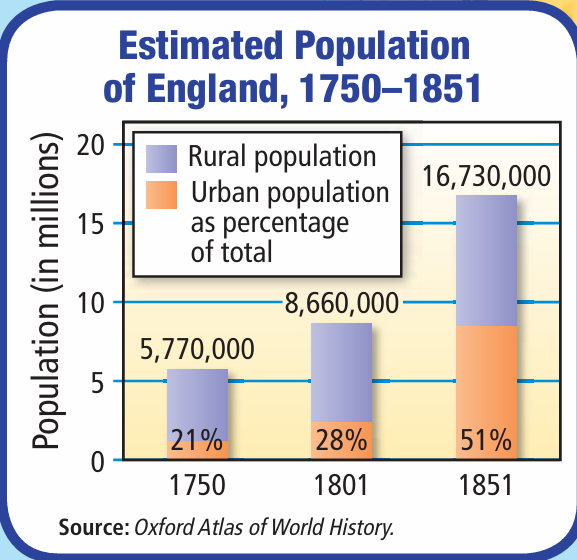
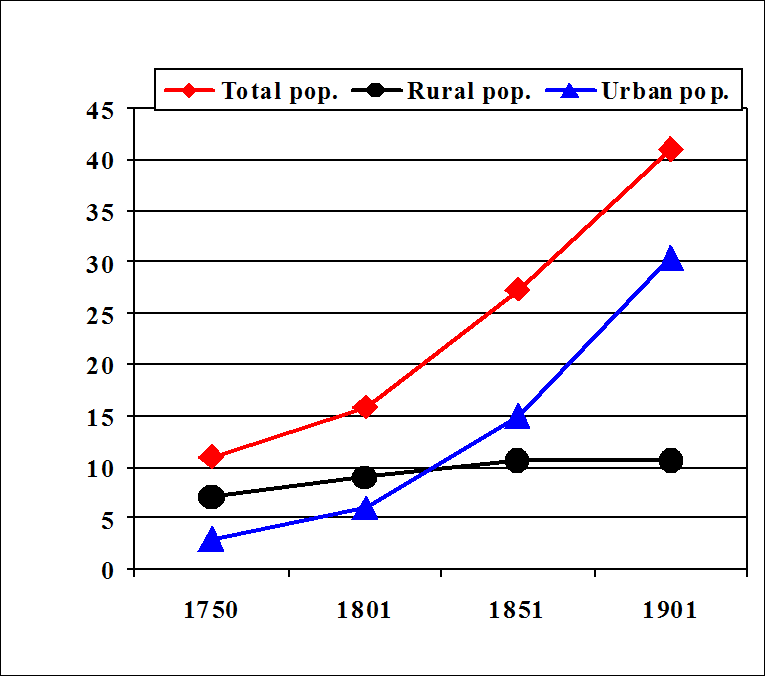
Generally speaking, between 1750s and 1900s the rural population increased only marginally, whereas the number living in towns grew by about 1000%.En términos generales, entre las décadas de 1750 y 1900 la población rural aumentó solo marginalmente, mientras que el número de personas que vivían en ciudades creció aproximadamente un 1000%.
What caused the population migration?¿Qué causó la migración de la población?
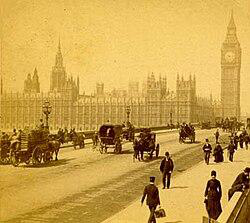
The population of Great Britain increased rapidly during the 1800s, with cities like London seeing a sharp rise in the number of people living there. The rapid growth was accompanied by overcrowding and associated medical issues.La población de Gran Bretaña aumentó rápidamente durante el siglo XIX, con ciudades como Londres experimentando un fuerte aumento en el número de personas que vivían allí. El rápido crecimiento fue acompañado de hacinamiento y problemas médicos asociados.
- In 1811 the population of England, Wales, Scotland and Ireland was 18 million.En 1811 la población de Inglaterra, Gales, Escocia e Irlanda era de 18 millones.
- By 1851 this had increased to 27 million.En 1851 había aumentado a 27 millones.
- London had grown in size from around 1.5 million to 2.5 million people. At the same time the number of people emigrating from Britain grew hugely from 2,000 to 300,000.Londres había crecido de alrededor de 1,5 millones a 2,5 millones de personas. Al mismo tiempo, el número de personas que emigraban de Gran Bretaña creció enormemente de 2.000 a 300.000.
- By 1850 more than half the British population lived in towns and cities and worked in factories and mines.Para 1850, más de la mitad de la población británica vivía en pueblos y ciudades y trabajaba en fábricas y minas.
- Many cities such as Liverpool, Glasgow and Manchester had grown in size.Muchas ciudades como Liverpool, Glasgow y Manchester habían crecido en tamaño.
7.2 New Social Classes7.2 Nuevas clases sociales
The new capitalist class, owners of factories, mills, foundries and mines but also providing services to the expanded populations of the new towns. Self-made men and entrepreneurs.La nueva clase capitalista, propietarios de fábricas, molinos, fundiciones y minas, pero también proveedores de servicios a las poblaciones ampliadas de las nuevas ciudades. Hombres hechos a sí mismos y emprendedores.
The new industrial working class. Free from feudal ties to sell their labour in the new factories. Unprotected, unorganized and easily exploited in badly paid, insecure and dangerous occupations.La nueva clase obrera industrial. Libre de vínculos feudales para vender su trabajo en las nuevas fábricas. Desprotegidos, desorganizados y fácilmente explotados en ocupaciones mal pagadas, inseguras y peligrosas.
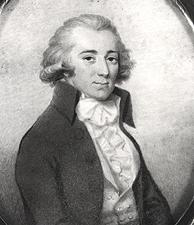
The new capitalist class, like Titus Salt and Samuel Gregg. Sons of merchants and early industrialists, they made vast fortunes in the industrial revolution.La nueva clase capitalista, como Titus Salt y Samuel Gregg. Hijos de comerciantes y primeros industriales, hicieron enormes fortunas en la revolución industrial.
The new middle class had significant economic influence but little national political power because Parliament was still dominated by a ruling landowning aristocracy. Many of the new middle class campaigned for political reform and changes to favour the interest of the new industrial economy. They were often very influential in local politics.La nueva clase media tenía una influencia económica significativa pero poco poder político nacional porque el Parlamento seguía dominado por una aristocracia terrateniente gobernante. Muchos de la nueva clase media hicieron campaña por reformas políticas y cambios que favorecieran los intereses de la nueva economía industrial. A menudo eran muy influyentes en la política local.
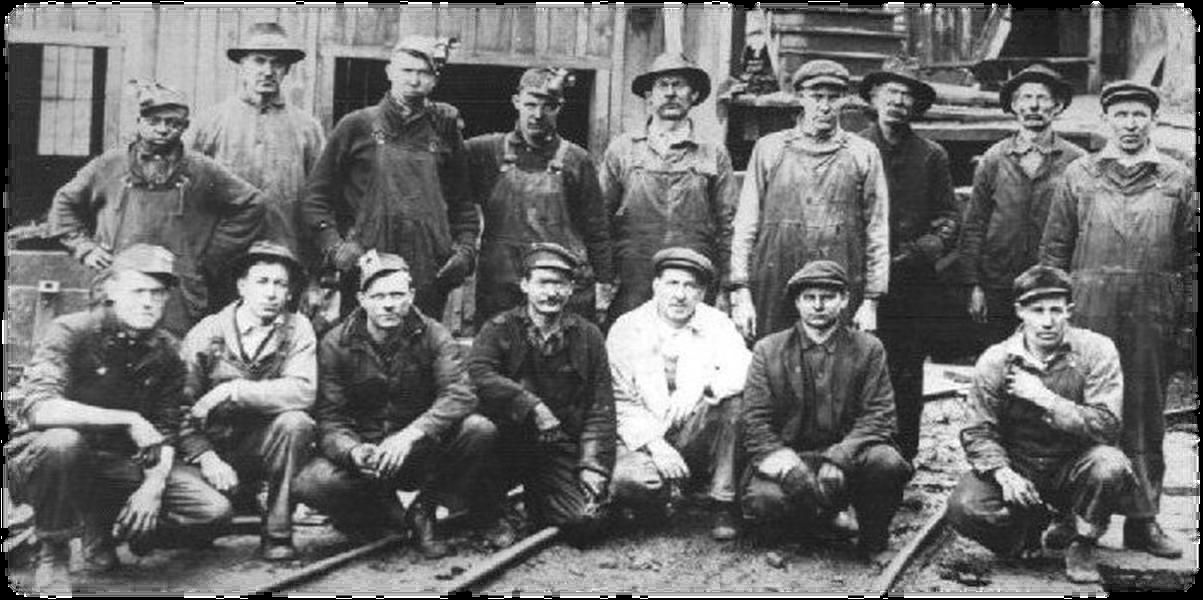
The new industrial working class were recent migrants from the countryside. They might be attracted by the freedom and excitement of the towns or driven from the countryside by declining wages and lost work opportunities.La nueva clase obrera industrial eran migrantes recientes del campo. Podían sentirse atraídos por la libertad y la emoción de las ciudades o verse expulsados del campo por salarios decrecientes y oportunidades de trabajo perdidas.
In the new towns they were concentrated in greater numbers than ever before, better educated than the peasants of the countryside; they were also victims of unregulated industrial living and working conditions. Their life experiences and expectations were unlike any social classes in previous history.En las nuevas ciudades estaban concentrados en números mayores que nunca, mejor educados que los campesinos del campo; también eran víctimas de condiciones de vida y trabajo industriales no reguladas. Sus experiencias de vida y expectativas eran diferentes a las de cualquier clase social de la historia anterior.
7.3 New Ways of Working7.3 Nuevas formas de trabajo
The change in the mode and method of production resulted in new ways of earning a living.El cambio en el modo y método de producción resultó en nuevas formas de ganarse la vida.
The home you left to go to work would probably have been overcrowded, damp, rat-infested, and without any sanitation (no toilet, bath, or running water).El hogar que dejabas para ir a trabajar probablemente estaba hacinado, húmedo, infestado de ratas y sin ningún tipo de saneamiento (sin inodoro, baño ni agua corriente).
You also would have had a very poor diet, based mainly on bread, bacon, and tea.También habrías tenido una dieta muy pobre, basada principalmente en pan, tocino y té.
To get to work you would have had to walk possibly two or three miles, no matter what the weather. Your only set of working clothes smelt of sweat and your shoes, if you had some, would have been well-worn and probably letting in water.Para llegar al trabajo habrías tenido que caminar posiblemente dos o tres millas, sin importar el clima. Tu única ropa de trabajo olía a sudor y tus zapatos, si tenías, estarían muy gastados y probablemente dejarían pasar el agua.
Feeling dirty, hungry, and weary you now have to face 13 hours of hard work in the factory.Sucio, hambriento y agotado, ahora te enfrentas a 13 horas de duro trabajo en la fábrica.
Imagine standing at the same machine for 13 hours a day or more.Imagina estar de pie ante la misma máquina 13 horas al día o más.
8. Working Conditions8. Condiciones laborales
8.1 Health and Safety in Factories8.1 Salud y seguridad en las fábricas
Today we expect our place of work to be safe and reasonably comfortable, but 200 years ago there were no laws governing health and safety.Hoy esperamos que nuestro lugar de trabajo sea seguro y razonablemente cómodo, pero hace 200 años no había leyes que regularan la salud y la seguridad.
A factory owner’s main concern was how much profit he made, and he was free to do this as he wanted. If he paid his workers more and put in safety precautions, he had to spend more money and therefore made less profit. Very few factory owners were prepared to reduce profits by improving the working conditions of their workers.La principal preocupación de un dueño de fábrica era cuánto beneficio obtenía, y era libre de hacerlo como quisiera. Si pagaba más a sus trabajadores e instalaba medidas de seguridad, tenía que gastar más dinero y por tanto obtenía menos beneficio. Muy pocos dueños de fábricas estaban dispuestos a reducir sus beneficios mejorando las condiciones laborales de sus trabajadores.
Unlike the workers in traditional skilled industries who were protected and represented by guilds, the new industrial working class had no union representation and because they were unskilled could easily be replaced.A diferencia de los trabajadores de las industrias tradicionales cualificadas que estaban protegidos y representados por gremios, la nueva clase obrera industrial no tenía representación sindical y, al no estar cualificados, podían ser reemplazados fácilmente.
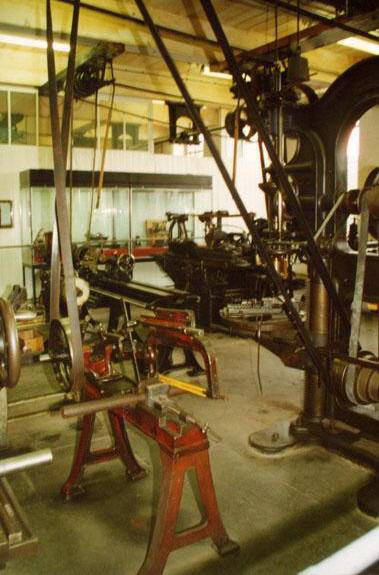
Dangerous machineryMaquinaria peligrosa
Many new machines were invented for mass producing in the factories. These cost a lot of money. That these machines were often dangerous for the operators was of little concern to the manufacturer. Usually, he was more concerned that any accident delayed the production process.Se inventaron muchas máquinas nuevas para la producción en masa en las fábricas. Costaban mucho dinero. Que estas máquinas fueran a menudo peligrosas para los operarios preocupaba poco al fabricante. Normalmente, le preocupaba más que cualquier accidente retrasara el proceso de producción.
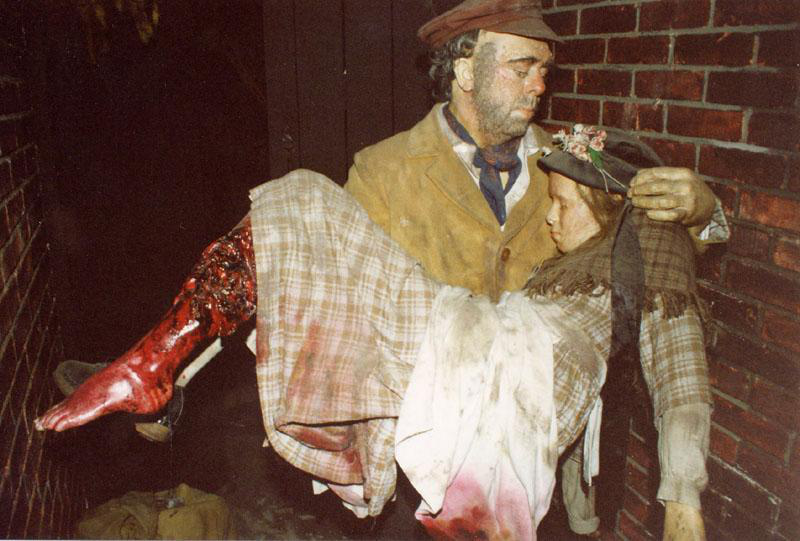
Accidents were commonplace and many people lost fingers, hands, or limbs with no compensation.Los accidentes eran habituales y muchas personas perdían dedos, manos o extremidades sin ninguna compensación.
“She was caught by her apron, which wrapped around the shaft. She was whirled around and repeatedly forced between the shaft and the carding engine. (Her right leg was found some distance away.)”«Fue atrapada por su delantal, que se enrolló alrededor del eje. Fue girada y forzada repetidamente entre el eje y la máquina de cardar. (Su pierna derecha fue encontrada a cierta distancia.)» A factory inspector reported what happened to a young girl in a textile factory in the 1840s.Un inspector de fábricas informó de lo que le ocurrió a una joven en una fábrica textil en la década de 1840.
Those injured in factory accidents had little chance of survival. Hospital care was poor, and there was no free health service.Los heridos en accidentes de fábrica tenían pocas posibilidades de sobrevivir. La atención hospitalaria era deficiente y no existía un servicio de salud gratuito.
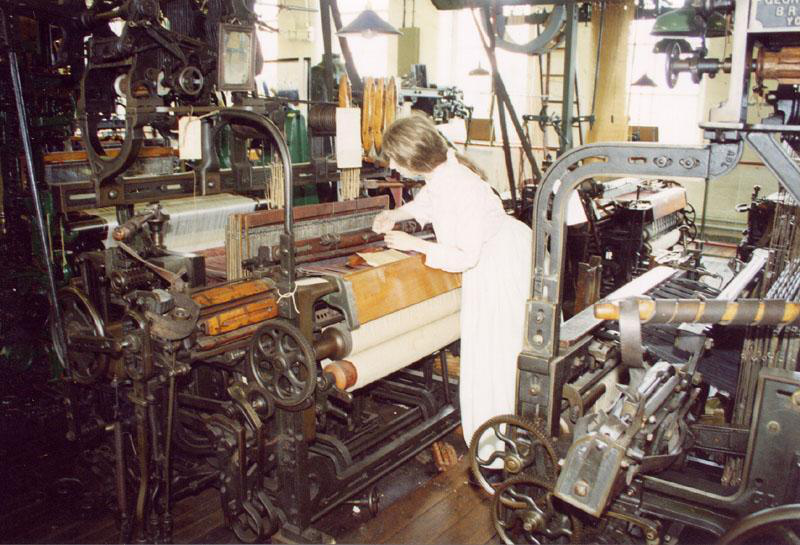
There were rarely any safety guards on drive bands or the moving parts of machinery.Rara vez había protecciones de seguridad en las correas de transmisión o las partes móviles de la maquinaria.
Factory conditionsCondiciones en las fábricas
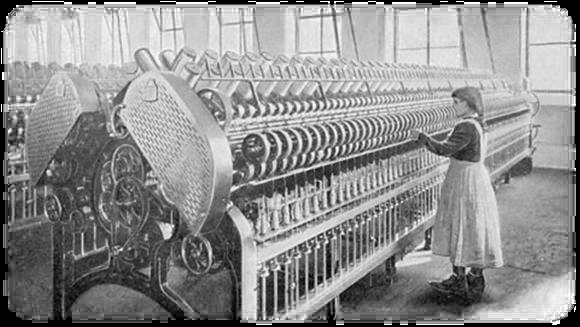
- Long working hoursLargas jornadas laborales — normal shifts were usually 12-14 hours a day, with extra time required during busy periods. Workers were often required to clean their machines during their mealtimes.los turnos normales eran generalmente de 12 a 14 horas al día, con tiempo extra requerido durante los períodos de mayor actividad. A menudo se exigía a los trabajadores que limpiaran sus máquinas durante las horas de comida.
- Low wagesSalarios bajos — a typical wage for male workers was about 15 shillings (75p) a week, but women and children were paid much less, with women earning seven shillings (35p) and children three shillings (15p). For this reason, employers preferred to employ women and children. Many men were sacked when they reached adulthood; then they had to be supported by their wives and children.un salario típico para trabajadores varones era de unos 15 chelines (75p) a la semana, pero a las mujeres y los niños se les pagaba mucho menos: las mujeres ganaban siete chelines (35p) y los niños tres chelines (15p). Por esta razón, los empleadores preferían contratar a mujeres y niños. Muchos hombres eran despedidos cuando llegaban a la edad adulta; entonces tenían que ser mantenidos por sus esposas e hijos.
- Cruel disciplineDisciplina cruel — there was frequent strapping (hitting with a leather strap). Other punishments included hanging iron weights around children’s necks, hanging them from the roof in baskets, nailing children’s ears to the table, and dowsing them in water butts to keep them awake.eran frecuentes los azotes con correas de cuero. Otros castigos incluían colgar pesos de hierro alrededor del cuello de los niños, colgarlos del techo en cestas, clavar las orejas de los niños a la mesa y sumergirlos en barriles de agua para mantenerlos despiertos.
- Fierce systems of finesSeveros sistemas de multas — these were imposed for talking or whistling, leaving the room without permission, or having a little dirt on a machine. It was claimed that employers altered the time on the clocks to make their workers late so that they could fine them. Some employers demanded that their overseers raise a minimum amount each week from fines.se imponían por hablar o silbar, abandonar la sala sin permiso o tener un poco de suciedad en una máquina. Se afirmaba que los empleadores alteraban la hora de los relojes para hacer llegar tarde a sus trabajadores y poder multarlos. Algunos empleadores exigían que sus capataces recaudaran una cantidad mínima cada semana mediante multas.
- AccidentsAccidentes — forcing children to crawl into dangerous, unguarded machinery led to many accidents. Up to 40 per cent of accident cases at Manchester Infirmary in 1833 were factory accidents.obligar a los niños a gatear dentro de maquinaria peligrosa y sin protecciones provocaba muchos accidentes. Hasta el 40 por ciento de los casos de accidentes en el Hospital de Manchester en 1833 eran accidentes de fábrica.
- HealthSalud — cotton thread had to be spun in damp, warm conditions. Going straight out into the cold night air led to many cases of pneumonia. The air was full of dust, which led to chest and lung diseases and loud noise made by machines damaged workers’ hearing.el hilo de algodón tenía que hilarse en condiciones húmedas y cálidas. Salir directamente al aire frío de la noche provocaba muchos casos de neumonía. El aire estaba lleno de polvo, lo que causaba enfermedades pulmonares y de pecho, y el fuerte ruido de las máquinas dañaba la audición de los trabajadores.
- Parish apprenticesAprendices parroquiales — orphans from workhouses in southern England were apprenticed to factory owners, supposedly to learn the textiles trade. They worked 12-hour shifts, and slept in barracks attached to the factory in beds just vacated by children about to start the next shift.huérfanos de asilos del sur de Inglaterra eran enviados como aprendices a dueños de fábricas, supuestamente para aprender el oficio textil. Trabajaban turnos de 12 horas y dormían en barracones junto a la fábrica, en camas recién abandonadas por niños que iban a empezar el siguiente turno.
Noise, heat and chemicalsRuido, calor y productos químicos
Some factories were so noisy that the workers went deaf. Factories were rarely heated in winter or ventilated in summer. Steam or gases often made the air unbearable.Algunas fábricas eran tan ruidosas que los trabajadores se quedaban sordos. Las fábricas rara vez se calentaban en invierno ni se ventilaban en verano. El vapor o los gases a menudo hacían el aire irrespirable.
There was no protection against dangerous chemicals or gases and the owner was not liable for any injuries.No había protección contra productos químicos o gases peligrosos y el propietario no era responsable de ninguna lesión.
“The packer has to enter a chamber which has been filled with chlorine gas. Though the worst of it has been allowed to escape, the atmosphere is still charged with deadly fumes. The heat is tremendous. Gassing is such a common matter that the men would describe it as they would tell you what their Sunday dinner was like.”«El embalador tiene que entrar en una cámara que ha sido llenada con gas cloro. Aunque lo peor se ha dejado escapar, la atmósfera aún está cargada de vapores mortíferos. El calor es tremendo. Las intoxicaciones por gas son algo tan común que los hombres las describirían como te contarían qué comieron el domingo.» Reference to ‘bleach powder packers’ in a Home Office report of 1893.Referencia a «embaladores de polvo blanqueador» en un informe del Ministerio del Interior de 1893.
8.2 Testimonies of Workers8.2 Testimonios de trabajadores
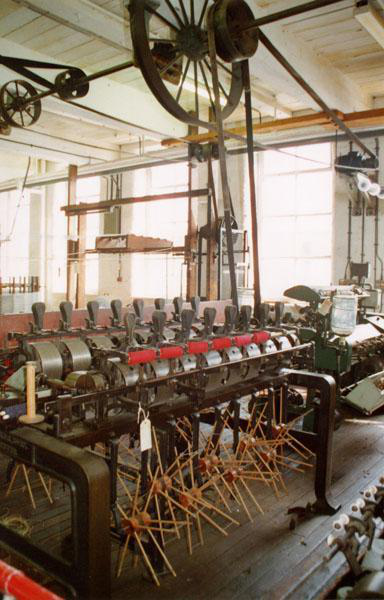

‘In what part of the mill did you work?’
‘In the card-room. It was very dusty. The dust got upon my lungs. I got so bad in health.’«¿En qué parte de la fábrica trabajaste?»
«En la sala de cardado. Había mucho polvo. El polvo se me metió en los pulmones. Mi salud empeoró mucho.» Evidence given by Elizabeth Bentley to a Parliamentary Committee in 1831.Testimonio dado por Elizabeth Bentley ante un Comité Parlamentario en 1831.
‘...we had but half got our dinners, and he put the clock forward to one, and he rang the bell, and we were obliged to run back to our work.’
‘Is there not considerable dust in that employment?’
‘Yes.’
‘Does it not injure your food very much?’
‘Yes, you cannot take the food out of your basket but that it is covered with dust directly.’«...apenas habíamos comido la mitad, y él adelantó el reloj a la una, y tocó la campana, y estuvimos obligados a correr de vuelta al trabajo.»
«¿No hay mucho polvo en ese empleo?»
«Sí.»
«¿No estropea mucho la comida?»
«Sí, no puedes sacar la comida de tu cesta sin que se cubra de polvo inmediatamente.» Joseph Hebergam, aged 17, 1831.17 años, 1831.
8.3 Child Labour8.3 Trabajo infantil
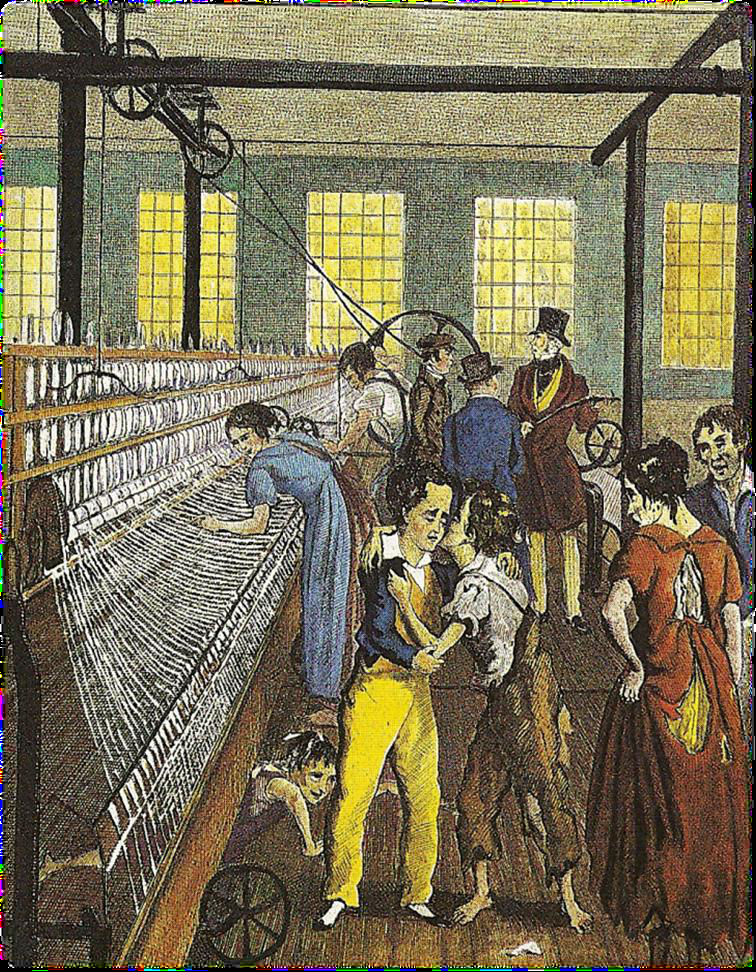
Today we, quite reasonably, expect to be treated fairly at work, but this was not the case in 19th century factories.Hoy, con toda razón, esperamos ser tratados con justicia en el trabajo, pero este no era el caso en las fábricas del siglo XIX.
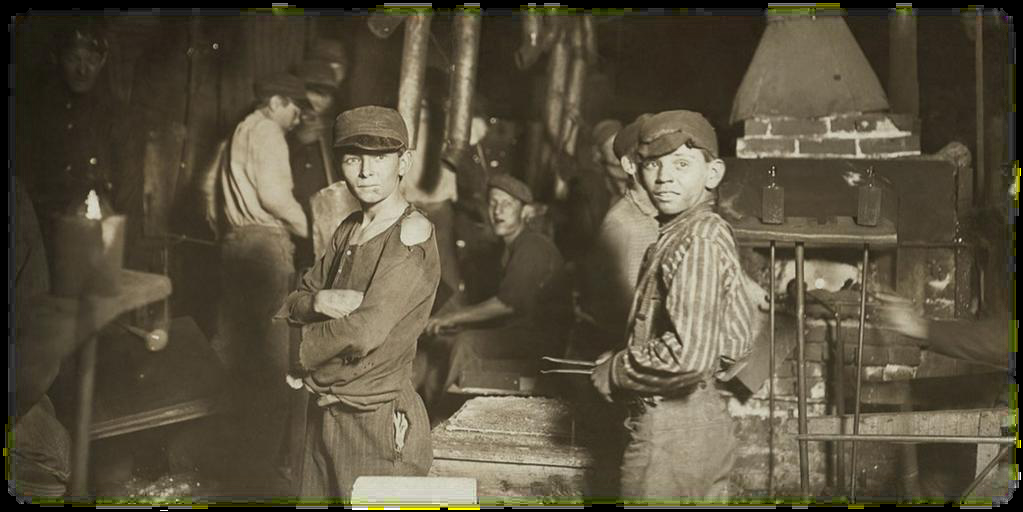
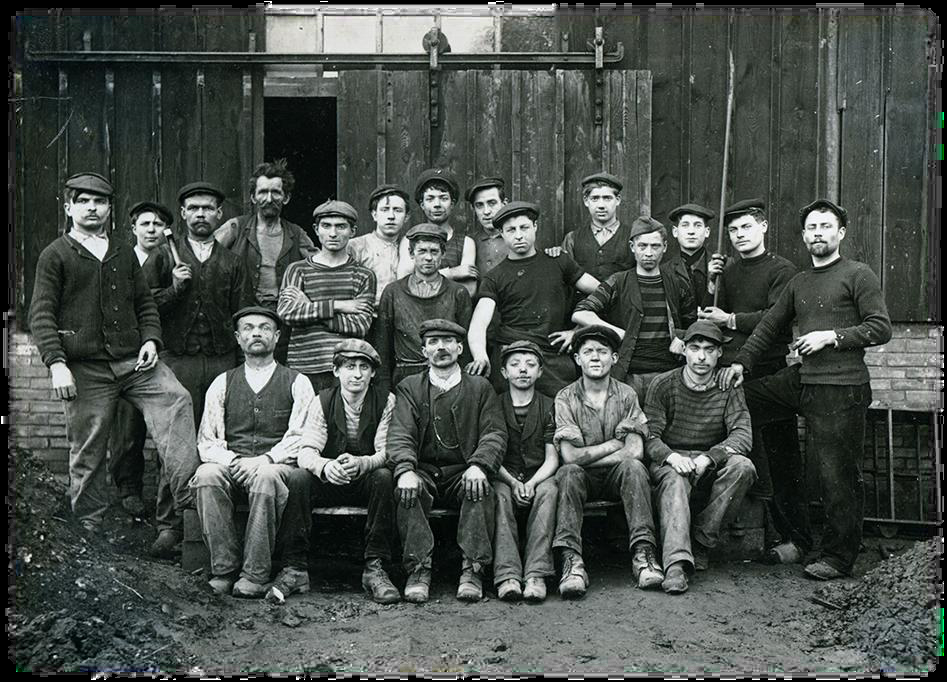
Many children, from as young as six years old, were employed because they could be paid very little and were small enough to crawl under the machines. Often, they would be beaten to keep them awake. All workers were fined for being late or slowing down in their work and they could be sacked immediately with no explanation.Muchos niños, desde los seis años de edad, eran empleados porque se les podía pagar muy poco y eran lo suficientemente pequeños para gatear bajo las máquinas. A menudo les pegaban para mantenerlos despiertos. Todos los trabajadores eran multados por llegar tarde o reducir el ritmo de trabajo y podían ser despedidos de inmediato sin explicación.

Questions for reflection:Preguntas para reflexionar:
- Why were children employed in factories?¿Por qué se empleaba a niños en las fábricas?
- Workers could not be treated like this today. Why did they accept it then?Los trabajadores no podrían ser tratados así hoy. ¿Por qué lo aceptaban entonces?
- Is this a reliable image of child labour in 19th century England?¿Es esta una imagen fiable del trabajo infantil en la Inglaterra del siglo XIX?
8.4 Factory Acts — Legislation8.4 Leyes de fábricas — Legislación
New laws (Acts of Parliament) passed during the 19th century in England tell us much about what work was like. In addition, new laws were often ignored.Las nuevas leyes (Actas del Parlamento) aprobadas durante el siglo XIX en Inglaterra nos dicen mucho sobre cómo era el trabajo. Además, las nuevas leyes a menudo eran ignoradas.
| LegislationLegislación | Main pointsPuntos principales |
|---|---|
| 1802 Health and Morals of Apprentices Act1802 Ley de Salud y Moral de los Aprendices | Children were limited to 12 hours of factory work a day. Children were to be given religious instruction.Los niños estaban limitados a 12 horas de trabajo diario en la fábrica. Se debía proporcionar instrucción religiosa a los niños. |
| 1819 Factory Act1819 Ley de Fábricas | No child under 9 could be employed in a cotton factory. Children between the ages of 9 and 16 were not allowed to work more than a 12-hour day.Ningún niño menor de 9 años podía ser empleado en una fábrica de algodón. Los niños entre 9 y 16 años no podían trabajar más de 12 horas al día. |
| 1833 Factory Act1833 Ley de Fábricas | Children between 9 and 14 were restricted to 8 hours work a day with 2 hours of compulsory education. Those under 18 could work only 12 hours a day. Four inspectors were appointed.Los niños entre 9 y 14 años estaban restringidos a 8 horas de trabajo diario con 2 horas de educación obligatoria. Los menores de 18 solo podían trabajar 12 horas al día. Se nombraron cuatro inspectores. |
| 1844 Factory Act1844 Ley de Fábricas | Dangerous machinery was to be fenced. Children under the age of 13 could not work more than 6.5 hours a day.La maquinaria peligrosa debía ser vallada. Los niños menores de 13 años no podían trabajar más de 6,5 horas al día. |
| 1853 Factory Act1853 Ley de Fábricas | The working day for adults was limited to 6am-6pm or 7am-7pm with a 1.5 hour break. This made a working day of 10.5 hours.La jornada laboral para adultos se limitó de 6am a 6pm o de 7am a 7pm con un descanso de 1,5 horas. Esto hacía una jornada laboral de 10,5 horas. |
| 1874 Factory Act1874 Ley de Fábricas | The working day for adults was limited to 10 hours and a half day on Saturday.La jornada laboral para adultos se limitó a 10 horas y medio día el sábado. |
| 1878 Factory and Workshops Act1878 Ley de Fábricas y Talleres | Factories and workshops were placed under general government inspection.Las fábricas y talleres fueron sometidos a inspección gubernamental general. |
9. Living Conditions9. Condiciones de vida
9.1 Housing9.1 Vivienda
Why were housing conditions so poor?¿Por qué eran tan malas las condiciones de vivienda?
As new factories were set up, houses, shops and inns had to be built for the workers who flocked to the towns hoping to find jobs. Thousands of new houses were built in a very short time, without any rules on planning or quality.A medida que se establecieron nuevas fábricas, hubo que construir casas, tiendas y posadas para los trabajadores que acudían en masa a las ciudades con la esperanza de encontrar empleo. Miles de casas nuevas se construyeron en muy poco tiempo, sin ninguna norma de planificación ni calidad.
‘These towns have been built by small speculators with no interest for anything except immediate profit. A carpenter and a brick-layer club together to buy a patch of ground, and cover it with what they call houses.’«Estas ciudades han sido construidas por pequeños especuladores sin interés por nada excepto el beneficio inmediato. Un carpintero y un albañil se asocian para comprar un trozo de terreno y cubrirlo con lo que llaman casas.»

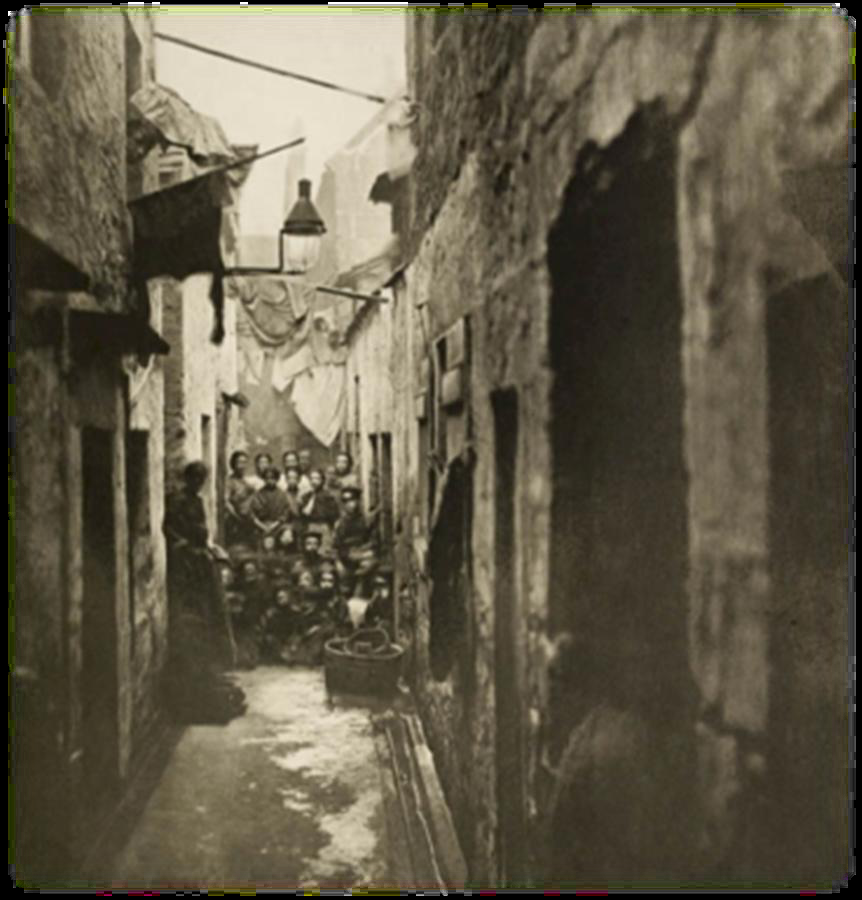
Houses were crammed together. Many had no foundations, were damp and lacked ventilation. Very few had any form of sanitation (toilets). Sometimes there was a privy (primitive toilet) shared between several houses.Las casas estaban apiñadas. Muchas no tenían cimientos, eran húmedas y carecían de ventilación. Muy pocas tenían algún tipo de saneamiento (retretes). A veces había una letrina (retrete primitivo) compartida entre varias casas.

OvercrowdingHacinamiento
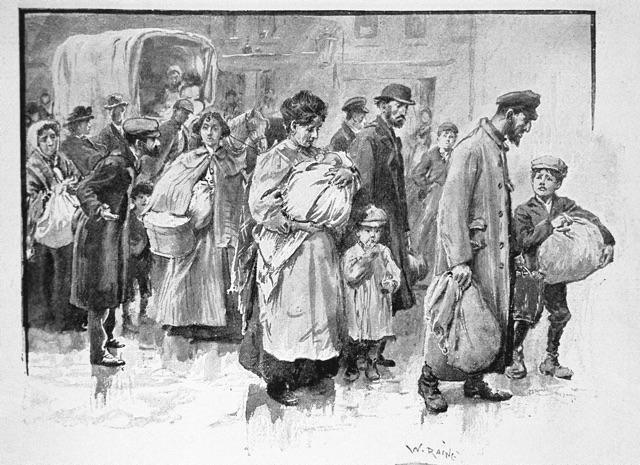
The shortage of housing often meant that one house accommodated several families, each having one room:La escasez de viviendas a menudo significaba que una casa albergaba a varias familias, cada una en una habitación:
‘On the second floor lived a widow. In her room lived her grown-up son, two daughters, and two or three children of one of these daughters. Above on the third floor lived a market porter, his wife and four children.’«En el segundo piso vivía una viuda. En su habitación vivían su hijo adulto, dos hijas y dos o tres hijos de una de estas hijas. Arriba, en el tercer piso, vivía un mozo de mercado, su mujer y cuatro hijos.» Charles Booth, 1889
Most of these slum dwellings contained little in the way of furniture. Many had just a table, a few chairs and a bed. Some did not even have that.La mayoría de estas viviendas miserables contenían pocos muebles. Muchas solo tenían una mesa, unas sillas y una cama. Algunas ni siquiera tenían eso.
A bed would be shared by several family members, and if some did shift work the bed could be used night and day.Una cama era compartida por varios miembros de la familia, y si algunos trabajaban por turnos, la cama podía usarse día y noche.
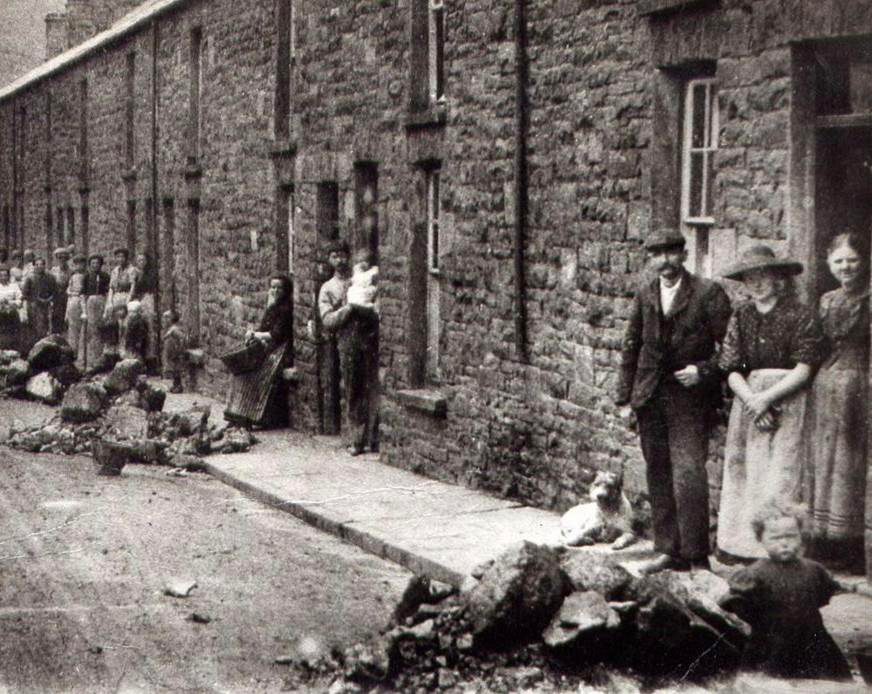
Living conditions in citiesCondiciones de vida en las ciudades
- PollutionContaminación — coal was used to heat houses, cook food and heat water to produce steam to power machines in factories. The burning of coal created smoke, which led to terrible pollution in the cities.el carbón se usaba para calentar casas, cocinar y calentar agua para producir vapor para las máquinas de las fábricas. La quema de carbón creaba humo, lo que provocaba una terrible contaminación en las ciudades.
- OvercrowdingHacinamiento — due to large numbers of people moving to the cities, there were not enough houses for all these people to live in. Low wages and high rents caused families to live in as small a space as possible. Sometimes whole families lived in one room.debido al gran número de personas que se mudaban a las ciudades, no había suficientes casas para todos. Los bajos salarios y los alquileres altos hacían que las familias vivieran en el espacio más pequeño posible. A veces familias enteras vivían en una sola habitación.
- Waste disposalEliminación de residuos — gutters were filled with litter and the streets were covered in horse manure, collected by boys to sell to farmers. Human waste was discharged directly into the sewers, which flowed straight into rivers. In London, Parliament had to stop work because the smell from the Thames became too much.las cunetas estaban llenas de basura y las calles cubiertas de estiércol de caballo, recogido por niños para venderlo a los granjeros. Los residuos humanos se vertían directamente en las alcantarillas, que desembocaban en los ríos. En Londres, el Parlamento tuvo que suspender sus sesiones porque el olor del Támesis era insoportable.
- Poor quality housingViviendas de mala calidad — houses were built very close together so there was little light or fresh air inside them. They did not have running water and people found it difficult to keep clean. Houses often suffered from damp due to their thin walls and roofs made out of cheap materials. Many households had to share a single outside toilet that was little more than a hole in the ground.las casas se construían muy juntas, por lo que había poca luz o aire fresco en su interior. No tenían agua corriente y a la gente le resultaba difícil mantenerse limpia. Las casas a menudo sufrían de humedad debido a sus paredes delgadas y tejados hechos de materiales baratos. Muchos hogares tenían que compartir un único retrete exterior que era poco más que un agujero en el suelo.
- Lack of fresh waterFalta de agua potable — people could get water from a variety of places, such as streams, wells and stand pipes, but this water was often polluted by human waste.la gente podía obtener agua de varios lugares, como arroyos, pozos y fuentes públicas, pero esta agua estaba a menudo contaminada por residuos humanos.
9.2 Health and Disease9.2 Salud y enfermedades
The major effect of such poor, overcrowded and dirty housing was poor health. The awful living conditions were an ideal environment for diseases to spread.El principal efecto de unas viviendas tan pobres, hacinadas y sucias era la mala salud. Las pésimas condiciones de vida eran un entorno ideal para la propagación de enfermedades.
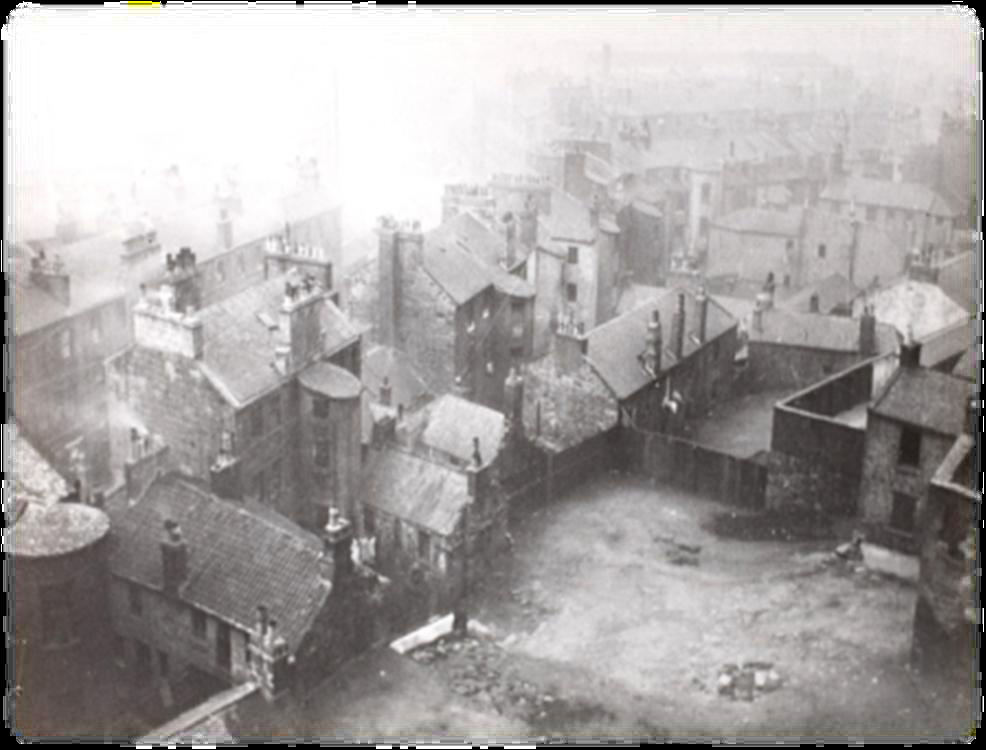
- Disease — typhus, typhoid, tuberculosis and cholera all existed in the cities of England. Cholera reached England for the first time in 1830, and there were further major epidemics in 1832 and 1848. Overcrowding, housing of a low standard and poor quality water supplies all helped spread disease.Enfermedades — el tifus, la fiebre tifoidea, la tuberculosis y el cólera existían en las ciudades de Inglaterra. El cólera llegó a Inglaterra por primera vez en 1830, y hubo nuevas grandes epidemias en 1832 y 1848. El hacinamiento, las viviendas de bajo nivel y el suministro de agua de mala calidad contribuyeron a propagar las enfermedades.
TB (tuberculosis), diphtheria, measles, cholera and influenza (flu) were just a few of the diseases which claimed hundreds of thousands of lives. Together with dangerous working conditions, long hours, poor diet and pollution, this resulted in an average life expectancy for the working class in Manchester of just 17 years.La tuberculosis, la difteria, el sarampión, el cólera y la gripe eran solo algunas de las enfermedades que se cobraron cientos de miles de vidas. Junto con las peligrosas condiciones de trabajo, las largas jornadas, la mala alimentación y la contaminación, esto resultó en una esperanza de vida media para la clase obrera en Manchester de solo 17 años.
9.3 Changes in Public Health9.3 Cambios en la salud pública
Before the 1830s nothing had been done about public health for many years. Two important reasons for this inactivity were that:Antes de la década de 1830 no se había hecho nada respecto a la salud pública durante muchos años. Dos razones importantes de esta inactividad eran que:
- Most governments felt they should not interfere too much in people’s lives. This was known as the principle of laissez faire — translated as ‘leave well alone’ or ‘let the people choose’. A government policy of interfering as little as possible in social and economic policy.La mayoría de los gobiernos sentían que no debían interferir demasiado en la vida de las personas. Esto se conocía como el principio de laissez faire — traducido como «dejar estar» o «dejar elegir a la gente». Una política gubernamental de interferir lo menos posible en la política social y económica.
- Any large scale public health improvements would be very expensive, and taxes would have to be raised.Cualquier mejora de salud pública a gran escala sería muy costosa y habría que subir los impuestos.
The Industrial periodEl período industrial
In the industrial period many factories were built and towns grew up beside them. The housing conditions were often very poor. The government was forced to intervene due to:En el período industrial se construyeron muchas fábricas y las ciudades crecieron junto a ellas. Las condiciones de vivienda eran a menudo muy malas. El gobierno se vio obligado a intervenir debido a:
- an increase in diseases such as typhoid and choleraun aumento de enfermedades como el tifus y el cólera
- the work of Edwin Chadwick which showed the connection between health and hygieneel trabajo de Edwin Chadwick que mostró la conexión entre salud e higiene
In 1842, Edwin Chadwick argued that disease was the main reason for poverty, and that preventing disease would reduce the poor rates.En 1842, Edwin Chadwick argumentó que la enfermedad era la principal razón de la pobreza, y que prevenir la enfermedad reduciría las tasas de pobreza.
In 1848, a cholera epidemic terrified the government into doing something about prevention of disease — through both public and individual health measures.En 1848, una epidemia de cólera aterrorizó al gobierno lo suficiente como para hacer algo respecto a la prevención de enfermedades — mediante medidas de salud tanto públicas como individuales.
Public measuresMedidas públicas
At first the government tried — as the Romans had done — to prevent illness among the population by public sanitation measures. The first public health measures were based upon the idea that miasmas (smells from decomposing material, such as animal and human waste, that were thought to cause disease) caused disease. Although the idea was wrong, the measures against the miasmas involved a greater focus on cleanliness, and this improved public health.Al principio, el gobierno intentó — como habían hecho los romanos — prevenir las enfermedades entre la población mediante medidas de saneamiento público. Las primeras medidas de salud pública se basaban en la idea de que los miasmas (olores de materia en descomposición, como residuos animales y humanos, que se creía causaban enfermedades) provocaban enfermedades. Aunque la idea era errónea, las medidas contra los miasmas implicaron un mayor enfoque en la limpieza, y esto mejoró la salud pública.
Further measures included:Otras medidas incluyeron:
- In 1848 the first Public Health Act caused the setting up of a Board of Health, and gave towns the right to appoint a Medical Officer of Health.En 1848 la primera Ley de Salud Pública provocó la creación de una Junta de Sanidad y dio a las ciudades el derecho a nombrar un Médico Oficial de Salud.
- In 1853 vaccination against smallpox was made compulsory.En 1853 la vacunación contra la viruela se hizo obligatoria.
- In 1854 improvements in hospital hygiene were introduced (thanks in large part to Florence Nightingale).En 1854 se introdujeron mejoras en la higiene hospitalaria (gracias en gran parte a Florence Nightingale).
- In 1875 a Public Health Act enforced laws about slum clearance, provision of sewers and clean water, and the removal of nuisances.En 1875 una Ley de Salud Pública impuso leyes sobre la eliminación de barrios marginales, la provisión de alcantarillado y agua limpia, y la eliminación de molestias.
The benefits of these measures soon became clear, and by the late 19th century local councils were competing with each other to provide the best public health.Los beneficios de estas medidas pronto se hicieron evidentes, y a finales del siglo XIX los ayuntamientos competían entre sí para proporcionar la mejor salud pública.
SummaryResumen
10. The Impact of the Railways10. El impacto de los ferrocarriles
10.1 The Railway System10.1 El sistema ferroviario
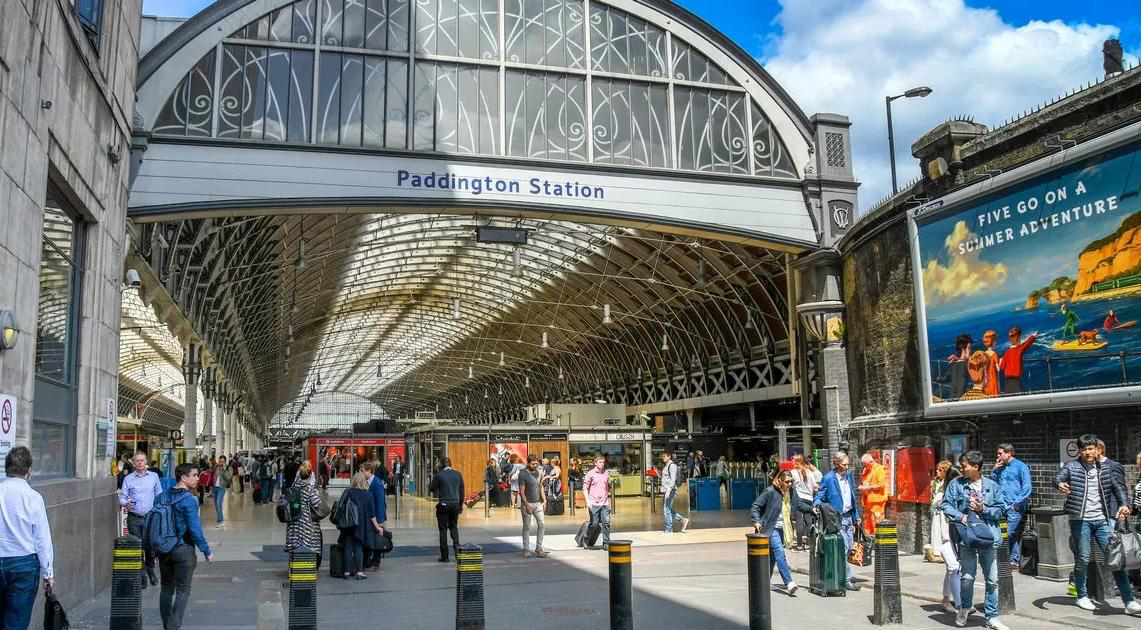
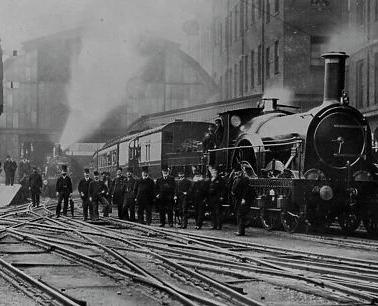
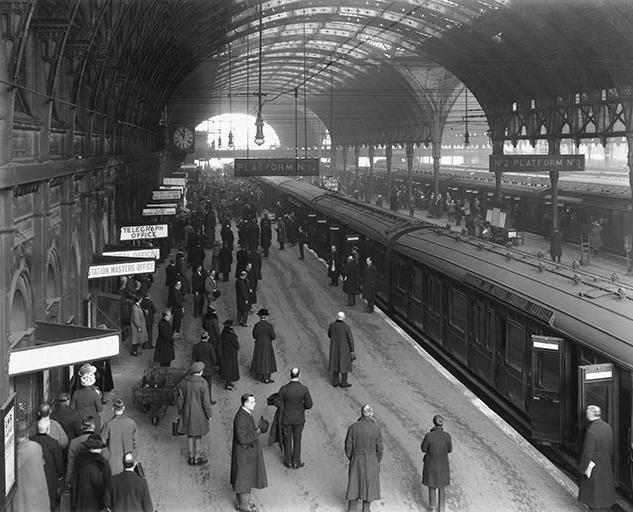
In the eighteenth century, more efficient means of moving resources and goods developed. Railroads were particularly important to the success of the Industrial Revolution.En el siglo XVIII se desarrollaron medios más eficientes para mover recursos y bienes. Los ferrocarriles fueron particularmente importantes para el éxito de la Revolución Industrial.
Richard Trevithick, an English engineer, built the first steam locomotive. In 1804, Trevithick’s locomotive ran on an industrial rail-line in Britain. It pulled 10 tons (9 t) of ore and 70 people at 5 miles (8.05 km) per hour. In 1813, George Stephenson built the Blucher, the first successful flanged wheel locomotive.Richard Trevithick, un ingeniero inglés, construyó la primera locomotora de vapor. En 1804, la locomotora de Trevithick circuló por una vía industrial en Gran Bretaña. Arrastró 10 toneladas (9 t) de mineral y 70 personas a 5 millas (8,05 km) por hora. En 1813, George Stephenson construyó el Blucher, la primera locomotora exitosa de ruedas con pestaña.
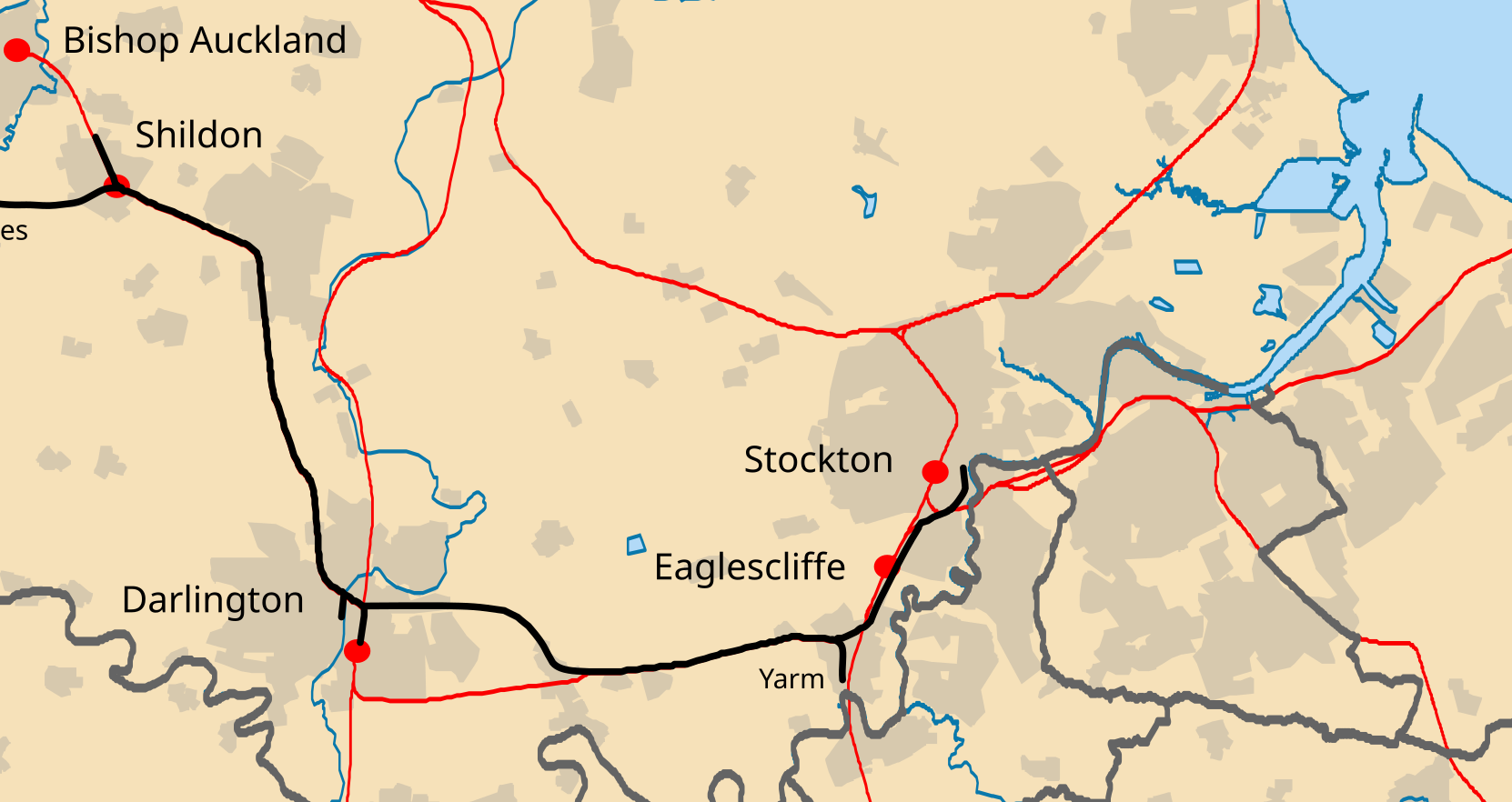
The success of Stockton & Darlington, the first true railroad, encouraged investors to link by rail the rich cotton-manufacturing town of Manchester with the thriving port of Liverpool, a distance of 32 miles (51.5 km).El éxito de Stockton y Darlington, el primer verdadero ferrocarril, animó a los inversores a unir por vía férrea la rica ciudad algodonera de Manchester con el próspero puerto de Liverpool, una distancia de 32 millas (51,5 km).
In 1829, the investors sponsored a competition to find the most suitable locomotive to do the job. They selected the Rocket.En 1829, los inversores patrocinaron un concurso para encontrar la locomotora más adecuada para el trabajo. Seleccionaron la Rocket.
10.2 Economic Impact10.2 Impacto económico
- Railroad expansion caused a ripple effect in the economy.La expansión ferroviaria causó un efecto en cadena en la economía.
- Building railroads created new jobs for farm laborers and peasants. Less expensive transportation led to lower priced goods, thus creating larger markets. More sales meant more factories and more machinery. Business owners could reinvest their profits in new equipment, adding to the growth of the economy.La construcción de ferrocarriles creó nuevos empleos para jornaleros y campesinos. El transporte más barato produjo bienes de menor precio, creando así mercados más amplios. Más ventas significaban más fábricas y más maquinaria. Los empresarios podían reinvertir sus beneficios en nuevo equipamiento, contribuyendo al crecimiento de la economía.
- This type of regular, ongoing economic growth became a basic feature of the new industrial economy.Este tipo de crecimiento económico regular y continuo se convirtió en una característica básica de la nueva economía industrial.
10.3 Social and Economic Effects10.3 Efectos sociales y económicos
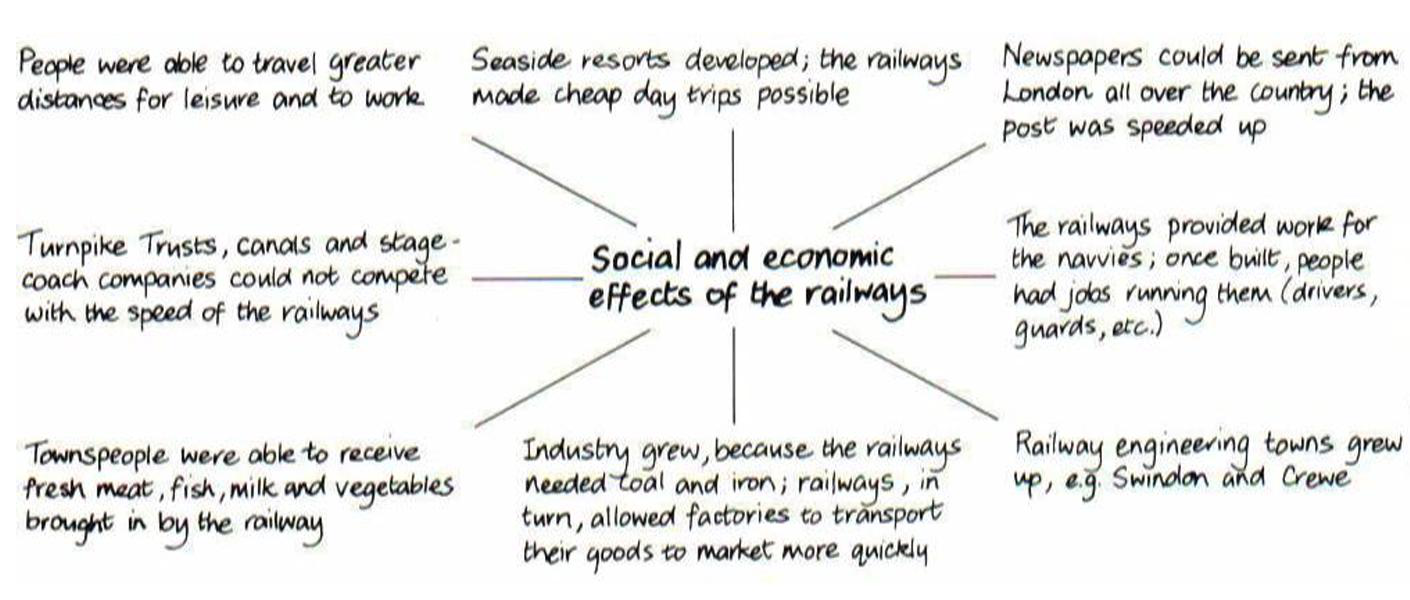
- People were able to travel greater distances for leisure and to work.La gente podía viajar mayores distancias por ocio y para trabajar.
- Seaside resorts developed; the railways made cheap day trips possible.Se desarrollaron balnearios costeros; los ferrocarriles hicieron posibles las excursiones baratas de un día.
- Newspapers could be sent from London all over the country; the post was speeded up.Los periódicos podían enviarse desde Londres a todo el país; el correo se aceleró.
- The railways provided work for the navvies; once built, people had jobs running them (drivers, guards, etc.).Los ferrocarriles proporcionaron trabajo a los peones; una vez construidos, la gente tenía empleos operándolos (maquinistas, guardas, etc.).
- Railway engineering towns grew up, e.g. Swindon and Crewe.Surgieron ciudades de ingeniería ferroviaria, p. ej. Swindon y Crewe.
- Industry grew, because the railways needed coal and iron; railways, in turn, allowed factories to transport their goods to market more quickly.La industria creció, porque los ferrocarriles necesitaban carbón y hierro; los ferrocarriles, a su vez, permitían a las fábricas transportar sus productos al mercado más rápidamente.
- Townspeople were able to receive fresh meat, fish, milk and vegetables brought in by the railway.Los habitantes de las ciudades podían recibir carne, pescado, leche y verduras frescas traídas por el ferrocarril.
- Turnpike Trusts, canals and stage-coach companies could not compete with the speed of the railways.Los fideicomisos de autopistas de peaje, los canales y las empresas de diligencias no podían competir con la velocidad de los ferrocarriles.
Video resourcesRecursos de vídeo
- Health and Housing: Britain 1750-1900 — Why was it so difficult to solve the public health problems of 19th century Britain?Salud y Vivienda: Gran Bretaña 1750-1900 — ¿Por qué fue tan difícil resolver los problemas de salud pública de la Gran Bretaña del siglo XIX?
Sources: S5HISEN course materials, BBC Bitesize, Encyclopaedia Britannica, Oxford Atlas of World HistoryFuentes: materiales del curso S5HISEN, BBC Bitesize, Encyclopaedia Britannica, Oxford Atlas of World History